
Freeze Dried vs Dehydrated Food: Which Process Fits Fruit Production?
Freeze dried vs dehydrated food is a product and investment decision, not simply a quality comparison. For fruit production, processors need to compare target texture, shape, saleable yield, packaging, equipment utilization and total production cost. Hot-air dehydration is often the better choice for conventional chewy fruit. However, freeze drying becomes commercially relevant when crispness, recognizable shape, rapid rehydration or premium positioning creates enough value to justify the added process cost.
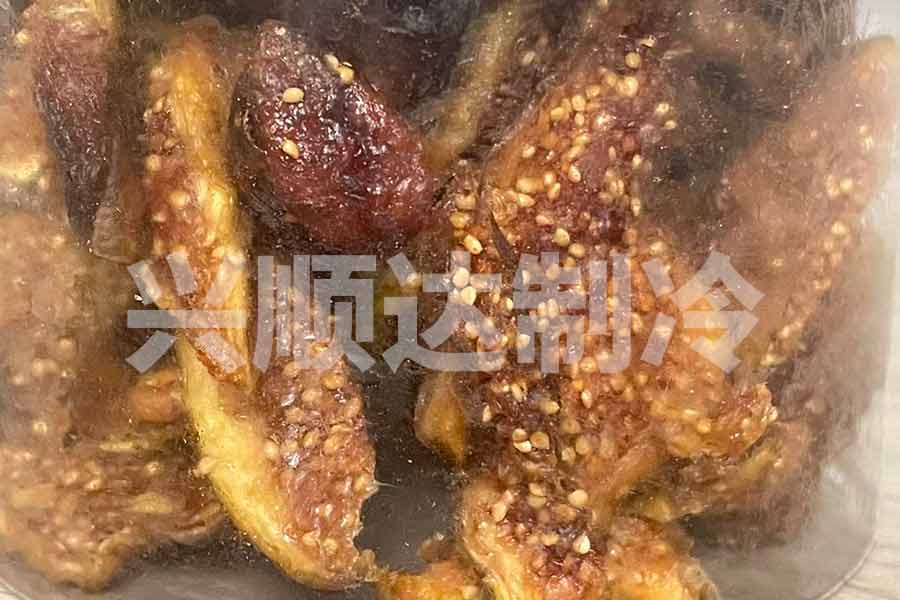 Dehydrated Fruit
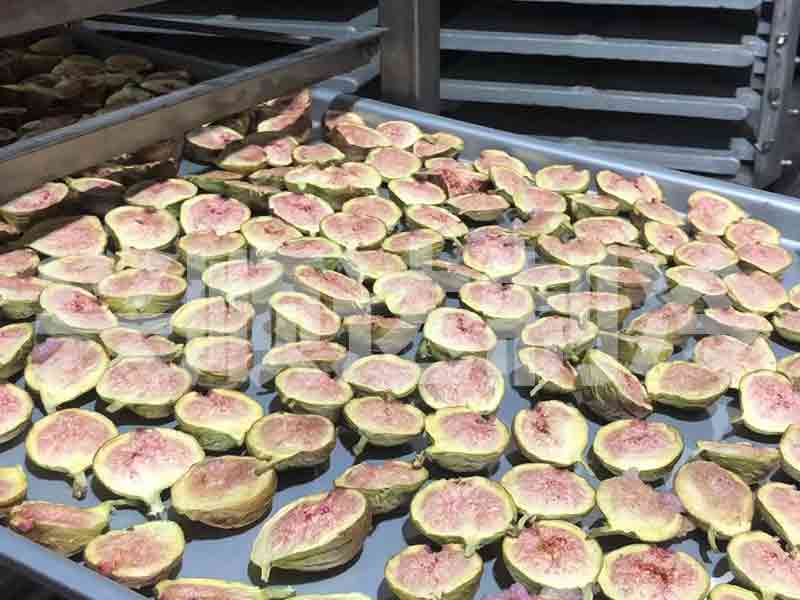 Freeze-Dried Fruit
The market expects an affordable, dense or chewy fruit product
Traditional mango slices, raisins, fruit leather and price-sensitive ingredients often fit hot-air dehydration well.
Crispness, shape or rehydration supports a premium price
Strawberry slices, berries, apple pieces and visible fruit inclusions can gain value from a porous structure and recognizable appearance.
Fruit behavior, packaging or market demand is still uncertain
Pilot testing should confirm cycle time, saleable yield and package performance before scale-up.
Quick Answer: Freeze Dried vs Dehydrated Food for Fruit Production
The main difference between freeze dried and dehydrated food is the water-removal mechanism and the structure left in the product. In fruit processing, hot-air dehydration removes liquid water through heat and airflow. In contrast, freeze drying freezes the fruit, reduces chamber pressure and supplies controlled heat so ice leaves mainly by sublimation and is captured by the condenser.[1] Processors also considering reduced-pressure evaporation can use the vacuum oven comparison to separate that mechanism from sublimation.
Neither process is universally better. Dehydration normally has a lower equipment barrier and suits dense or chewy fruit. However, freeze drying should be considered when a light, crisp structure, better shape retention or rapid rehydration supports a higher selling price or a specific ingredient function. Therefore, the broader freeze dried food vs dehydrated food decision should be narrowed to the actual fruit, finished specification and target market.
How Fruit Dehydration and Freeze Drying Differ
Heat and moving air evaporate liquid water
A fruit dehydrator controls heat and airflow so moisture moves from the fruit to the surrounding air. The National Center for Home Food Preservation describes the same basic use of controlled heat and air circulation.
- Initial equipment investment is usually lower.
- Shrinkage and a dense or chewy texture may be acceptable.
- Temperature, airflow, humidity, loading and time control the result.
Freezing, vacuum and controlled heat remove ice
Freeze drying requires refrigeration, a sealed chamber, vacuum generation, controlled shelf heating and a condenser capable of capturing the released water vapor. Product temperature, absolute pressure, heat input, dry-layer resistance and condenser load interact throughout the cycle.[1]
- Recognizable shape and porous structure can be retained more effectively.
- The finished fruit is often light and crisp.
- Capital cost and process-control requirements are higher.
The detailed engineering sequence is covered in how industrial freeze drying works. Fruit-specific preparation, thickness, loading and endpoint controls are covered in the commercial fruit freeze-drying guide.
Freeze-Dried Fruit vs Dehydrated Fruit: Commercial Comparison
| Decision factor | Dehydrated fruit | Freeze-dried fruit | Business meaning |
|---|---|---|---|
| Water-removal method | Heated airflow evaporates liquid water. | Frozen water is removed under vacuum, mainly by sublimation. | Freeze drying requires refrigeration, vacuum and vapor capture. |
| Typical texture | Dense, leathery, chewy or firm. | Light, porous and usually crisp when fully dried. | Texture determines product positioning and consumer expectation. |
| Shape and shrinkage | Greater shrinkage is common. | Recognizable slices or pieces can often be retained better. | Appearance matters for premium snacks and visible inclusions. |
| Rehydration | Usually slower because the structure is denser. | Usually faster because the structure is more porous. | Important for cereals, dairy inclusions, bakery ingredients and instant products. |
| Initial equipment cost | Usually lower. | Higher. | Equipment price must be compared with margin and annual utilization. |
| Packaging sensitivity | Product-dependent. | High moisture-barrier packaging is normally critical. | Delayed packing can cause moisture pickup and loss of crispness. |
| Best commercial fit | Traditional dried fruit, fruit leather and price-sensitive products. | Premium fruit snacks, fruit powders and high-value inclusions. | The market must pay for the quality difference. |
Texture, Shape and Consumer Experience
Chewy fruit can be the correct product
A dense or chewy texture is not a defect when the product brief calls for traditional dried mango, raisins, dates or fruit leather. In these markets, lower processing cost and familiar texture may create more value than a porous structure.
Crisp fruit can support premium positioning
Freeze drying is more relevant when the product needs to break cleanly, remain visually recognizable or function as a light snack or inclusion. Strawberry slices, raspberries, blueberries, apples, pears, pineapple and mango can all fit this positioning, but each fruit requires its own process test.
Shape only matters when the customer values it
Better shape retention can improve shelf appeal and ingredient visibility. However, appearance should not be treated as an automatic return on investment. The commercial value exists only when the sales channel, formulation or consumer experience rewards that difference.
Color, Flavor and Nutrient Retention
Freeze drying generally exposes fruit to lower product temperatures than conventional hot-air dehydration. This can reduce some heat-related quality losses. Nevertheless, no single nutrient-retention percentage applies to every fruit because variety, maturity, pretreatment, oxygen exposure, freezing rate, drying conditions and storage all influence the result.
A controlled study of Hallabong citrus powders reported higher vitamin C, lower browning and greater water solubility in freeze-dried samples than in samples dried with 60 °C hot air. Those findings apply to that fruit and test condition; they should not be generalized to every product.[2]
A broader evidence review is available in does freeze drying remove nutrients?
Freeze-Dried vs Dehydrated Fruit Shelf Life
Neither drying method creates a fixed shelf life. Instead, final moisture, packaging barrier, oxygen exposure, storage temperature, light and seal integrity determine stability. Porous freeze-dried fruit can also absorb moisture rapidly after unloading, making fast and controlled packaging essential.
The Hallabong study reported greater hygroscopicity in the freeze-dried powders, which illustrates why porous products can require stricter moisture protection.[2] The National Center for Home Food Preservation also notes that dried foods can reabsorb moisture and should be packaged promptly.
Therefore, fruit processors should validate the finished package rather than the drying cycle alone. Related guidance includes freeze-dried food packaging, freeze-dried food shelf life and storage of freeze-dried food.
Production Cost: Compare More Than Machine Price
A dehydrator usually has a lower equipment cost because the system can be built around heated airflow. By contrast, a freeze dryer additionally requires refrigeration, a sealed vacuum chamber, vacuum pumps, a condenser, controlled heating, instrumentation and automation. A useful comparison therefore starts with cost per saleable kilogram rather than the machine quotation alone.
- Fruit purchase and preparation loss
- Saleable finished-product yield
- Electricity, heat and refrigeration
- Labor and batch turnaround
- Packaging material and pack-out loss
- Maintenance and planned spare parts
- Depreciation and financing
- Rejected batches and quality variation
Cost should be calculated on saleable output
However, wet input alone can be misleading. A project may process a large quantity of fresh fruit but still produce weak returns if preparation losses, broken pieces, moisture pickup or rejected packs reduce saleable output.
Freeze drying is justified only when added value covers added cost
Nevertheless, a higher selling price does not automatically mean higher profit. Therefore, the processor should compare product margin, batch time, annual utilization, packaging cost and the additional installed investment. The detailed framework is available in the industrial freeze-drying cost analysis and the freeze-dryer energy-use guide.
Need a fruit-specific process and capacity review?
The engineering team can review fruit type, slice thickness, expected loading, daily wet-material target, required texture and packaging format before recommending pilot testing or a production-scale freeze dryer.
Which Fruits Are Better Suited to Each Process?
| Fruit type | Dehydration fit | Freeze-drying fit | Main production risk |
|---|---|---|---|
| Apple and pear slices | Traditional chewy slices | Crisp snacks and visible inclusions | Thickness variation and browning |
| Strawberries and raspberries | Purees, leather or selected slices | High-value whole or sliced products | Fragile structure and breakage |
| Blueberries | Possible with long drying and strong shrinkage | Premium berry products after validated pretreatment | Skin resistance and uneven center drying |
| Pineapple and mango | Well suited to familiar chewy fruit | Premium crisp pieces when the market supports the cost | High sugar, stickiness and collapse risk |
| Banana | Traditional slices and chewy products | Crisp slices or powder applications | Browning, sugar and texture control |
| Avocado | Limited conventional dried-fruit fit | Possible only after careful pilot validation | High fat, oxidation and structural collapse |
Fruit-specific guidance is available for mango, blueberries, raspberries and avocado.
Real Commercial Fruit Freeze-Drying Examples
Manufacturer-published project data provide a more useful scale-up reference than generic cycle claims. The figures below are project-specific results rather than guaranteed settings for another fruit, maturity level or equipment configuration.
| Fruit project | Production basis | Recorded result | Commercial lesson |
|---|---|---|---|
| Pineapple, 20 m² project | 12.2 kg/m² Approx. 244 kg/batch |
12 h; 2.31% final moisture Approx. 1.73 kWh/kg wet material |
High-sugar fruit requires controlled slicing, loading, endpoint verification and immediate moisture-barrier packaging. |
| Blueberries, 30 m² project | Commercial berry production | 13 h drying time; 1.97% final moisture | Berry skin resistance makes center dryness and batch uniformity critical. |
| Pear slices, 100 m² project | 8 mm slices; about 12 kg/m² | 12 h drying time; 2.21% final moisture | Large-scale fruit planning must align cutting capacity, tray loading, condenser load, utilities and packaging speed. |
A Five-Step Process Selection Framework
- Define the finished fruit product. Specify whether the target is chewy, crisp, powdered, whole, sliced or used as an inclusion.
- Define the customer and selling price. Identify whether the product is intended for retail snacks, cereals, dairy, bakery, ingredients or export markets.
- Calculate water removal and saleable yield. Include peeling, trimming, cutting loss, broken pieces and packaging rejection.
- Compare total installed and operating cost. Include equipment, utilities, labor, maintenance, packaging, financing and site preparation.
- Run a representative pilot test. Verify final moisture, center dryness, mass stability, sensory quality, rehydration, batch consistency, breakage ratio, powder or dust generation, transport handling and package performance.
The freeze-drying time chart can support early planning, but a fruit-specific test remains necessary before selecting production capacity.
When a Fruit Processor Should Not Choose Freeze Drying
A fruit processor should pause before investing in freeze drying when:
- The market only accepts the price of conventional dried fruit.
- The intended product should be flexible or chewy rather than crisp.
- Annual demand is too low to keep the selected machine productively loaded.
- The sales channel and target price have not been validated.
- The packaging cannot protect a porous and moisture-sensitive product.
- Seasonal raw-material supply has not been matched to annual production planning.
- The decision is based only on a competitor using freeze drying.
- No representative trial has confirmed quality and cycle time.
This screening strengthens supplier credibility because it prevents an unsuitable equipment recommendation. A broader investment checklist is available in is a freeze dryer worth it?
From Pilot Test to Commercial Freeze-Dryer Capacity
SDG60 / SDG90
Suitable for fruit trials, process validation and collecting data before commercial scale-up.
SDG350 / SDG700 / SDG1100
Suitable for established fruit products that require repeatable batch production and documented operating conditions.
SDG1600 / SDG3000 / SDG6000
Suitable for factory-scale projects that require utility planning, material handling, packaging coordination and installation engineering.
Model selection should be based on daily wet-material demand, expected kilograms per square meter, batch time, water to be removed, condenser load, packaging capacity and annual utilization. Nominal shelf area alone is not a sufficient sizing basis.
Choose the Fruit Process Before Choosing the Machine
A useful technical review should include fruit type and variety, maturity, pretreatment, slice thickness, daily wet-material target, required texture, expected package size and factory location. These inputs allow the engineering team to determine whether dehydration, pilot freeze drying or a larger production system is the more credible route.
FAQ: Freeze-Dried vs Dehydrated Fruit
Is freeze-dried fruit the same as dehydrated fruit?
No. Dehydrated fruit is dried mainly through evaporation using heat and airflow. Freeze-dried fruit is frozen first and then dried under vacuum, so frozen water leaves mainly by sublimation.
Which process produces crisp fruit?
Freeze drying is generally better suited to a light, porous and crisp fruit structure. Conventional dehydration normally creates a denser or chewier product.
Which process is cheaper for commercial fruit production?
Hot-air dehydration normally requires less complex equipment and a lower initial investment. The better financial choice still depends on saleable yield, selling price, batch time, packaging and annual utilization.
Does freeze-dried fruit retain more nutrients?
Lower product temperatures can reduce some heat-related losses, but nutrient retention depends on the fruit, pretreatment, oxygen exposure, process conditions and storage. Product-specific laboratory testing is required for nutrition claims.
Does freeze-dried fruit last longer?
No fixed shelf life applies to every product. Final moisture, oxygen, package barrier, storage temperature, light and seal integrity must all be validated.
Which fruits are most suitable for freeze drying?
Strawberries, raspberries, blueberries, apples, pears, pineapple and mango can be suitable when the market values crispness, shape or rapid rehydration. Each fruit still requires a representative test.
Can a dehydrator make freeze-dried fruit?
No. A dehydrator does not provide the freezing, sealed vacuum chamber, low-pressure environment and condenser system required for freeze drying.
Why is pilot testing necessary before buying a production machine?
Pilot testing confirms drying time, final moisture, center dryness, saleable yield, texture, rehydration, breakage, dust generation, transport handling and packaging behavior. These data are needed to select capacity and estimate cost with greater confidence.
Sources and References
- Nowak D, Jakubczyk E. The Freeze-Drying of Foods—The Characteristic of the Process Course and the Effect of Its Parameters on the Physical Properties of Food Materials. Foods. 2020;9(10):1488. DOI: 10.3390/foods9101488
- Lee C-W, Oh H-J, Han S-H, Lim S-B. Effects of Hot Air and Freeze Drying Methods on Physicochemical Properties of Citrus ‘Hallabong’ Powders. Food Science and Biotechnology. 2012;21(6):1633–1639. DOI: 10.1007/s10068-012-0217-8
- Khalloufi S, Ratti C. Quality Deterioration of Freeze-dried Foods as Explained by their Glass Transition Temperature and Internal Structure. Journal of Food Science. 2003;68(3):892–903. DOI: 10.1111/j.1365-2621.2003.tb08262.x
Authoritative guidance and project evidence
- National Center for Home Food Preservation, University of Georgia Cooperative Extension: Food Dehydrators and Packaging and Storing Dried Foods.
- Commercial fruit project figures are taken from the linked pineapple, blueberry and pear case-study pages. Results are product- and project-specific and should be confirmed through representative trials.
Editorial disclosure: this article is published on a food freeze-dryer website operated by a manufacturer. To reduce commercial bias, it identifies situations where hot-air dehydration may be the more practical process and recommends representative testing before equipment purchase.