
Industrial Freeze Drying Equipment: How to Plan a Complete Food Production System
Industrial freeze drying equipment should be selected as a coordinated production system, not as an isolated chamber. This guide helps food factories turn product data, water load, usable tray area, cycle validation, utilities, and packaging demand into a defensible equipment brief.
Technical review: Zheng Wei and the manufacturer’s engineering team · Literature review updated July 2, 2026
Direct answer: industrial freeze drying equipment is only correctly sized when the complete line is considered: preparation, pre-freezing, loading, chamber, condenser, refrigeration, vacuum, heating, controls, defrosting, unloading, and packaging. Start with the product, daily wet input, initial moisture, target quality, tested loading density, cycle time, and factory utilities—not a model number.
What Is a Freeze Drying System?
A freeze dryer removes ice from frozen food under vacuum. A freeze drying system also includes the condenser, refrigeration, vacuum, heating, controls, defrosting, utility interfaces, and maintenance access. A complete production line adds preparation, pre-freezing, material handling, unloading, and packaging.
Freeze Dryer
Chamber, trays or racks, condenser, vacuum, heating, sensors, controls, and defrosting.
Operating System
Refrigeration, cooling, power, steam where required, drainage, monitoring, and service access.
Production Line
Preparation, pre-freezing, loading, drying, unloading, sealing, and finished-product handling.
A project proposal should define the supplier scope, customer-supplied utilities, and how each stage matches the target output. Factories still comparing general categories can review the food freeze dryer selection guide.
Complete Food Freeze-Drying Process Flow
The dryer cannot correct an unbalanced line. Preparation, pre-freezing, drying, unloading, and packaging should be planned together.
Preparation, Loading, and Pre-Freezing
Slice thickness, particle size, liquid depth, formulation, and loading density affect cycle time and quality. A thinner layer shortens the transfer path but reduces wet load per square metre, so the product should be tested instead of using a catalogue assumption.[2] The centre must be frozen before strong vacuum is applied, and external pre-freezing capacity must match dryer turnaround.
Drying, Unloading, and Packaging
During primary drying, heat supports sublimation while the condenser captures vapour. Secondary drying removes more strongly retained moisture, with the recipe protecting shape, colour, texture, aroma, and rehydration.[1] Because finished food absorbs moisture quickly, the packaging line should accept each batch without long exposure. See the commercial freeze-dried food packaging guide.
Data Required Before Designing Freeze Drying Systems
A useful proposal begins with product and factory data. Without these inputs, a quoted capacity is only a broad estimate.
| Design input | Information the buyer should provide | Why it changes the system |
|---|---|---|
| Product | Fruit, vegetable, meat, seafood, cooked food, dairy, liquid, extract, or pet food | Structure and formulation change freezing and mass-transfer behaviour. |
| Daily wet input | Required kilograms or tonnes per 24 hours | Defines the initial capacity target. |
| Initial moisture | Measured or reliable formulation value | Determines the water the condenser must capture. |
| Geometry | Slice size, thickness, particle size, or liquid depth | Controls drying resistance and cycle time. |
| Loading density | Validated kg/m², or samples for testing | Converts tray area into real batch load. |
| Quality target | Final moisture, appearance, texture, aroma, and rehydration | Sets the process endpoint and allowable product temperature. |
| Operating plan | Hours per day, days per week, changeovers, and cleaning | Defines batches per day and required redundancy. |
| Factory utilities | Voltage, power, steam, cooling water, drainage, and compressed air | Determines feasible heating, cooling, and installation arrangements. |
| Packaging plan | Pack size, packs per hour, barrier requirement, and nitrogen option | Prevents finished product from waiting unprotected. |
How to Size Industrial Freeze Drying Equipment
Move from product data to water load, usable tray area, condenser duty, turnaround, and line balance. Starting with a model name reverses the correct engineering sequence.
1. Calculate Water to Remove
Dry solids = Wet batch × (1 − initial moisture fraction)
Final product mass = Dry solids ÷ (1 − target final moisture fraction)
Water removed = Wet batch − final product mass
Example: 1,200 kg at 85% initial moisture and 2% final moisture contains about 180 kg dry solids, produces about 184 kg finished product, and requires removal of about 1,016 kg water.
2. Convert Batch Load into Usable Area
Required usable tray area = Wet batch load ÷ validated loading density
At a tested 12 kg/m², a 1,200 kg batch needs about 100 m². The calculation is simple; validating loading density and cycle time is the important step.
3. Match the Condenser and Turnaround
The condenser must capture the batch water load during active sublimation and still allow practical defrosting. The manufacturer’s current industrial design basis is at least 2 kg H₂O/m²·h. This first-party specification must be checked against the product and proposed recipe. See the freeze dryer condenser guide.
Total turnaround = loading + freezing allowance + drying + unloading + defrosting + cleaning
Batches per day = available operating hours ÷ total turnaround
Daily wet capacity = wet load per batch × batches per day
Use the freeze-drying time guide to assess factors that change the drying portion of the cycle.
4. Check the Real Bottleneck
Plant output is limited by the slowest stage: preparation, tray labour, pre-freezing, dryer turnaround, unloading, packaging, or cold-trap defrosting. In one 10 m² mushroom-soup pilot, the shortest and lowest-energy secondary-drying programme did not give the best yield or sensory score. Throughput should therefore be compared with accepted product quality, not hours or kWh alone.[3]
Need a Capacity and Water-Load Review?
The engineering team can review the product, moisture, loading, operating hours, and utilities before recommending usable area, cold-trap arrangement, and a preliminary layout.
Core Equipment and Controls
Chamber, Trays, Condenser, and Defrosting
The chamber should withstand repeated vacuum cycles, support hygienic cleaning, and provide inspection access. Capacity claims should state usable tray area and loading assumptions. The cold trap must match vapour flow, total ice load, defrost method, meltwater route, and turnaround. External dual cold traps are an optional solution where alternating defrost supports the required production schedule.

Vacuum, Refrigeration, and Heating
Industrial systems commonly use a Roots pump with rotary-vane or water-ring backing. Current commercial and industrial configurations are designed to reach 133 Pa in less than 18 minutes during a suitable empty-chamber test and normally operate within 26–100 Pa for food recipes. The proposal should state test conditions and leak criteria. The INFICON Porter CDG020D is gas-type independent, supporting stable absolute-pressure measurement in water-vapour service. See the vacuum pump guide.

Refrigeration must support the cold trap and repeated batches under the site’s cooling-water and ambient conditions. Radiation heating supplies sublimation energy, but product temperature must remain inside the tested quality limit. Product probes, heating-medium sensors, pressure data, and position mapping should be reviewed together.[2][3]


HMI, Records, Alarms, and Remote Support
The control system should record product and heating temperatures, condenser temperature, pressure, stage time, and alarms. Recipe management supports repeatability, while records provide evidence for FAT, SAT, training, and batch review.
Pilot, Commercial, or Industrial Equipment?
The category should follow validated wet-material demand and available utilities. The ranges below describe this manufacturer’s current product families; they are planning references, not universal market definitions.
| Product family | Wet input/24 h | Best use | Key site question |
|---|---|---|---|
| Lab / Pilot | 60–120 kg | Testing, recipe development, market trials, and scale-up data | Can the pilot recipe transfer to the planned production scale? |
| Commercial | 340 kg–1.36 t | Established brands and medium-batch food production | Can the electrical supply support the required cycle plan? |
| Industrial | 1.2–8 t | Large food factories and multi-tonne production | Can steam, cooling, rigging, drainage, and packaging support the line? |
Detailed specifications remain on the lab and pilot, commercial, and industrial freeze dryer product pages. This separation helps the present guide focus on engineering scope rather than duplicate product-intent content.
Industrial Model Reference

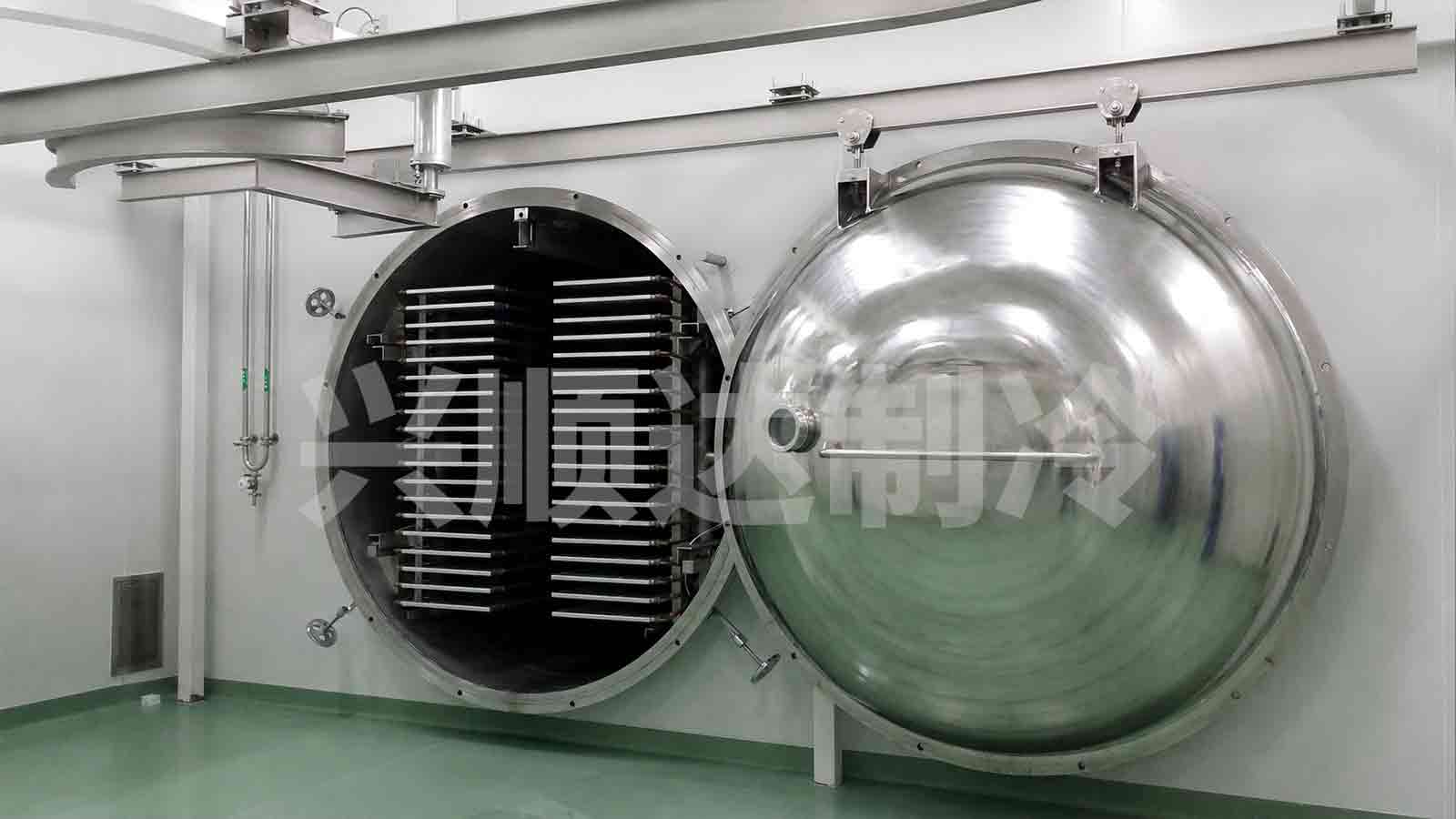

| Model | Wet input/24 h | Installed electric power | Peak steam demand |
|---|---|---|---|
| SDG1600 | 1.2–2 t | 148 kW | 150 kg/h at 0.5–0.7 MPa |
| SDG3000 | 3–4 t | 279.7 kW | 300 kg/h at 0.5–0.7 MPa |
| SDG6000 | 6–8 t | 510.2 kW | 600 kg/h at 0.5–0.7 MPa |
Source: manufacturer’s current SDG model specifications, reviewed July 2026. Actual output depends on product moisture, loading density, thickness, recipe, turnaround, and operating hours. Buyers comparing capital budgets can also review the industrial freeze dryer price guide.
Electric or Steam-Supported Heating?
Electric heating suits commercial capacity and sites without stable steam. Steam-supported heating is intended for multi-tonne industrial output where boiler infrastructure is available.
| Factor | Electric commercial system | Steam-supported industrial system |
|---|---|---|
| Best fit | Medium output; simpler utility connection | Large output; boiler and steam network available |
| Company planning reference | About 1.7 kWh/kg wet material | About 1.1 kWh electricity plus 1.5 kg steam/kg wet material |
| Decision basis | Electrical capacity and tariff | Electricity, steam cost, boiler capacity, and continuity |
These are first-party planning values, not independent benchmarks. Request the product, wet load, removed water, accepted yield, cycle boundary, and meter basis behind an energy claim. The freeze-drying cost guide includes labour, packaging, yield, maintenance, and utilisation.
Upstream and Downstream Equipment
The quotation should define the dryer supply boundary while the layout reserves space and utilities for the surrounding line. Typical upstream equipment includes washing, cutting, cooking or mixing, tray loading, rack handling, and pre-freezing. Typical downstream equipment includes enclosed transfer, portioning, sealing, optional nitrogen flushing, metal detection, labelling, and case packing.
Packaging equipment is normally outside the freeze dryer supply unless the quotation states otherwise. Its throughput must match the dry yield and batch discharge. See the freeze-dried food packaging guide for barrier and line-planning details.
Factory Layout and Utility Requirements
Large commercial and industrial freeze drying systems should normally be installed at ground level. Equipment weight, support loads, rigging, maintenance access, drainage, vibration, and safety make upper-floor installation unsuitable as a routine option.

Space and Access
- Equipment footprint plus operating aisles
- Door-opening and rack-transfer paths
- Vacuum-pump and refrigeration maintenance clearance
- Control-cabinet service space
- Rigging route, unloading area, and crane access
- Packaging and finished-product flow
Utilities to Confirm Before Final Design
- Three-phase voltage, frequency, and available transformer capacity
- Steam pressure and peak flow for industrial systems
- Cooling-water temperature, flow, quality, and heat rejection
- Drainage for defrost and cleaning water
- Compressed air where valves or packaging equipment require it
- Ventilation, room temperature, network, and remote-access policy
Factory preparation is primarily the customer’s responsibility, based on the supplier’s drawings and utility list. The supplier should provide foundation loads, connection points, maintenance clearances, equipment dimensions, and rigging requirements early enough for civil and utility work. The detailed commercial freeze dryer installation guide explains site preparation, delivery access, drainage, and commissioning responsibilities.
Hygiene, Product Quality, and Endpoint Verification
Freeze drying is not a universal kill step. The food factory remains responsible for raw-material controls, preventive controls where required, hygienic handling, environmental management, and packaging under the regulations of its markets.
- Final moisture content and product-centre dryness
- Mass stability where appropriate
- Colour, aroma, texture, appearance, and rehydration
- Batch consistency and recorded process limits
- Packaging integrity and shelf-life verification
- Alarm and deviation review
A temperature trend can support endpoint judgment but should not replace the product specification. In the cited mushroom-soup pilot, researchers used a temperature-approach criterion and then measured moisture; the limits were product-specific.[3] Routine project verification uses final moisture, centre dryness, mass stability where appropriate, sensory quality, rehydration, and batch consistency. Water activity is added only when required by the customer’s specification or validation protocol. See the FAT and SAT validation guide.
For regulatory starting points, review FDA Current Good Manufacturing Practice and preventive-control information and Codex CXC 1-1969. These sources do not replace product- and market-specific legal advice.
Real Production References
Project data builds trust only when the product, load, usable area, time and endpoint are stated together. The following are the manufacturer’s first-party case references, not independent comparative trials; use them to form test questions for a new product.
Cooked Fried Rice · India
A 10 m² SDG350 processed cooked fried rice in a short commercial cycle.
- Batch load
- 125 kg
- Drying time
- 6 hours
- Final moisture
- 1.28%
- Energy
- 1.67 kWh/kg wet material
Pear Slices · Oregon, USA
A 100 m² SDG3000 processed 8 mm pear slices at industrial loading.
- Batch load
- 1,200 kg
- Loading
- 12 kg/m²
- Drying time
- 12 hours
- Final moisture
- 2.21%
Shrimp · Kochi, India
A 200 m² SDG6000 demonstrated the higher throughput required for seafood ingredients.
- Batch load
- 2,320 kg
- Loading
- 11.6 kg/m²
- Drying time
- 8 hours
- Final moisture
- 1.68%
More product and equipment references are available in the freeze dryer customer case-study library. Comparable data is useful for preliminary sizing, but a new product should still be tested when its structure, formulation, thickness, or quality target differs materially.
What Should a Complete Project Quote Include?
A low headline price can exclude essential systems or services. Buyers should request a written supply boundary and responsibility matrix.
Equipment and documentation
- Drying chamber, trays, racks, and doors
- Vacuum, refrigeration, condenser, heating, and control systems
- Defrosting and supplied cooling arrangement
- Electrical drawings, utility list, layout, foundation loads, and manuals
- Recommended spare parts and consumables
Project services
- Factory acceptance testing before shipment
- Packing, shipping scope, and site-receiving requirements
- Installation guidance, commissioning, and site acceptance testing
- Operator and maintenance training
- Initial production support, process records, and remote after-sales service
The quotation should also state customer-supplied items such as building work, foundations, electrical distribution, steam piping, cooling-water piping, drainage, lifting, local labour, and packaging equipment.
Five Common Design Mistakes
Selecting by tray area alone
Usable area becomes meaningful only after loading density, thickness, water load, and cycle time are validated.
Ignoring pre-freezing and defrosting
Pre-freezer capacity, ice removal, drainage, cleaning, and changeover determine real batches per day.
Planning the dryer but not packaging
Finished food can absorb moisture while waiting if the packaging line cannot accept a full batch.
Confirming a model before utilities
Insufficient power, steam, cooling, height, ground-floor access, or rigging space can force redesign.
Comparing purchase price alone
Cycle time, accepted yield, energy, labour, maintenance, spares, training, and support determine lifetime cost.
How to Evaluate an Industrial Freeze Drying Equipment Supplier
A capable supplier should explain the proposal in engineering terms and identify the basis of each capacity, utility, and performance claim.
- Relevant food-product projects and comparable equipment-scale data
- Clear water-load, usable-area, loading-density, and cycle assumptions
- Condenser, vacuum, refrigeration, and pressure-measurement configuration
- Factory layout, utility list, foundation loads, rigging, and maintenance clearances
- Defined FAT, SAT, training, first-production support, spares, and remote service
The industrial freeze dryer manufacturer comparison guide provides a fuller procurement checklist without duplicating it here.
Request a Freeze-Drying System Layout and Model Recommendation
Send the product photos, initial moisture, dimensions, daily wet-material target, final-moisture target, factory space, voltage, steam condition, cooling-water information, and planned operating hours. The engineering team can then prepare a preliminary model, utility, and layout recommendation.
Frequently Asked Questions
How is industrial freeze drying equipment capacity calculated?
Use wet input, initial and final moisture, validated loading density, usable tray area, condenser duty, total turnaround, and available operating hours.
Does an industrial line need a separate pre-freezer?
Often yes. It allows the next batch to freeze while the dryer operates, but its tray capacity and freezing rate must match the production schedule.
Can one system process different foods?
Yes, when trays, cleaning, recipes, and hygiene controls suit the products. Each food still needs a validated loading method and drying recipe.
What information is needed for an accurate quote?
Provide product photos, dimensions, initial moisture, target final moisture, daily wet input, operating hours, factory space, voltage, steam, cooling water, and installation country.
Conclusion: Buy Industrial Freeze Drying Equipment as a Verified System
Begin with wet material and water removal, then verify usable tray area, condenser duty, cycle time, pre-freezing, utilities, packaging and factory access. Product testing or comparable project data should support the final recipe and model, while the quotation should define the supply boundary, customer responsibilities, FAT, SAT, training, first-production support, records, spare parts and after-sales service.
Start with Product and Factory Data
The engineering team can review the product, moisture, required daily output, site utilities, and factory layout before recommending a pilot, commercial, or industrial freeze drying system.
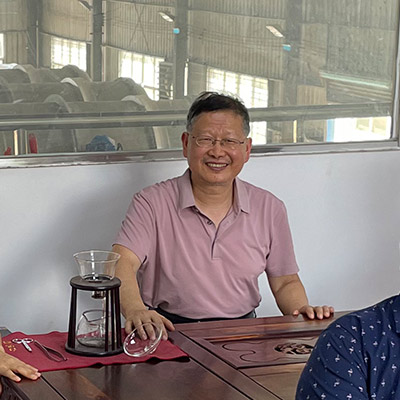
About the Author: Zheng Wei
Zheng Wei participates in the company’s food freeze-drying projects, including sample testing, equipment selection, vacuum-system configuration, refrigeration planning, installation guidance, operator training, and drying-process optimisation. The technical review of this article covers system boundaries, sizing logic, utility inputs, validation questions and the limits of first-party performance data.
Company: Fuzhou Xing Shun Da Refrigeration Facility Project Co., Ltd. · View company information
Evidence policy: model specifications and case data are identified as manufacturer-supplied. Literature-backed claims are cited below, and product-specific research results are not presented as universal equipment guarantees.
References and External Technical Sources
- Ratti C. Freeze drying for food powder production. In: Bhandari B, Bansal N, Zhang M, Schuck P, eds. Handbook of Food Powders: Processes and Properties. Woodhead Publishing; 2013:57-84. Freeze Drying for Food Powder Production — DOI: 10.1533/9780857098672.1.57
- 陈仪男. 冻干食品过程参数优化的研究现状[J]. 食品工业科技, 2005(1):182-184. DOI: 10.13386/j.issn1002-0306.2005.01.062.
- 史德芳, 范秀芝, 殷朝敏, 等. 基于能耗分析的真空冷冻干燥食用菌汤块制备中试[J]. 农业工程学报, 2021, 37(10):253-260. DOI: 10.11975/j.issn.1002-6819.2021.10.030.
- INFICON: Porter CDG020D capacitance diaphragm gauge
- U.S. FDA: Current Good Manufacturing Practices for Food
- Codex CXC 1-1969: General Principles of Food Hygiene