
Commercial flower preservation guide
Floral Freeze Dryer for Commercial Flower Preservation: How to Choose the Right System

A floral freeze dryer can help a florist, bouquet-preservation studio, or flower processor retain the three-dimensional form of delicate plant material. The buying decision should not start with a nominal kg-per-batch number. Usable chamber geometry, shelf spacing, water load, process evidence, validated cycle time, and weekly order volume determine whether a freeze dryer for flowers is commercially practical.
What Is a Floral Freeze Dryer?
A floral freeze dryer removes water from frozen plant material under vacuum. During primary drying, ice leaves the product mainly by sublimation rather than by melting first; secondary drying then removes additional bound moisture. Food and pharmaceutical freeze drying use the same core physics. In addition, the manufacturer’s guide to how freeze drying works provides a separate explanation of the process.
The load is different from a shallow food tray. A rose head, orchid, peony, long stem, or assembled bouquet is bulky, fragile, and often non-uniform. Therefore, buyers should evaluate a flower freeze drying machine by usable height, support, shelf configuration, vapor path, and handling access—not only advertised tray area.
University of Florida IFAS describes freeze drying as a way to produce natural-looking preserved plant material, while noting the need for specialized equipment and handling.[1] Research on roses and carnations found that freeze-drying conditions affected residual moisture, colour and petal or stem strength, which supports a flower-specific validation approach rather than a universal recipe.[2]
Who This Guide Is For
This page is for commercial ornamental-flower preservation: wedding bouquets, memorial arrangements, display flowers, florist preservation studios, and related archival or decorative work. It is a feasibility and equipment-selection guide, not a retail page for finished dried flowers and not a universal recipe for household use.
Which Flowers Can Be Freeze-Dried?
Buyers can test roses, carnations, orchids, chrysanthemums, peonies, lilies, and mixed arrangements. However, successful freeze drying does not mean that every variety should use the same recipe. Petal thickness, bloom density, stem water, pigment stability, tissue structure, and the desired finished appearance can change the process window. In roses and carnations, published work found that vacuum-drying temperature influenced colour, residual moisture and mechanical strength.[2]
| Load type | Main engineering concern | Evidence to capture |
|---|---|---|
| Single flower heads | Petal support, spacing, and colour consistency | Shape retention, colour change, brittleness, endpoint and handling damage |
| Flowers with stems | Added water mass, stem length, support and chamber height | Stem dryness, support method, breakage during unloading and post-processing |
| Complete bouquets | Diameter, height, non-uniform mass and restricted vapor path | Qualified pieces per batch, slowest locations, visual consistency and rework rate |
| Mixed arrangements | Different species and parts may finish at different rates | Whether one cycle can meet all appearance and dryness criteria without over-drying delicate petals |
A purchasing test should resemble the largest and most difficult real load the business expects to accept. A few loose petals may show basic feasibility, but they cannot prove that a tall wedding bouquet will fit, dry uniformly, or survive unloading.
How to Freeze Dry Flowers in a Commercial Workflow
Operators must develop the exact cycle from representative samples. Even so, they can standardize the commercial workflow before they finalize the recipe:
For example, a study of Osmanthus fragrans found that material thickness and the shelf heating program affected drying efficiency, while slower heating better preserved petal surface structure in that tested flower.[3] The practical conclusion is not to copy its setpoints; it is to test the actual flower, thickness and equipment proposed for the business.
Why Floral Freeze Dryer Capacity Should Not Be Selected by kg Alone
Weight capacity is useful, but it can be misleading for floral work. In practice, whole blooms and bouquets occupy a large volume relative to their mass. Consequently, a machine may reach its spatial limit before it reaches the nominal kg limit used for denser products.
Buyers moving from a pilot to a commercial commercial freeze dryer system should ask for a loaded test or a clearly scoped capacity model. A scientific equipment-design review explains that maximum sublimation rate and condenser capacity are dryer-specific and that different equipment scales respond differently to sublimation load; its data is based on pharmaceutical vial systems, so the engineering principle can guide questions but its numerical values should not be transferred to flower production.[4]
Chamber Size and Shelf Spacing Matter for Whole Bouquets
A freeze drying machine for flowers needs enough vertical and horizontal clearance for the actual arrangement. Shelf spacing that works for shallow food trays may waste floral capacity or make a complete bouquet impossible to load.
Before requesting a quotation, measure maximum bouquet height, maximum diameter, typical single-flower height, stem length and preferred loading orientation. Identify whether shelves need to be removable or adjustable. Compare these measurements with usable internal dimensions rather than outside machine size.
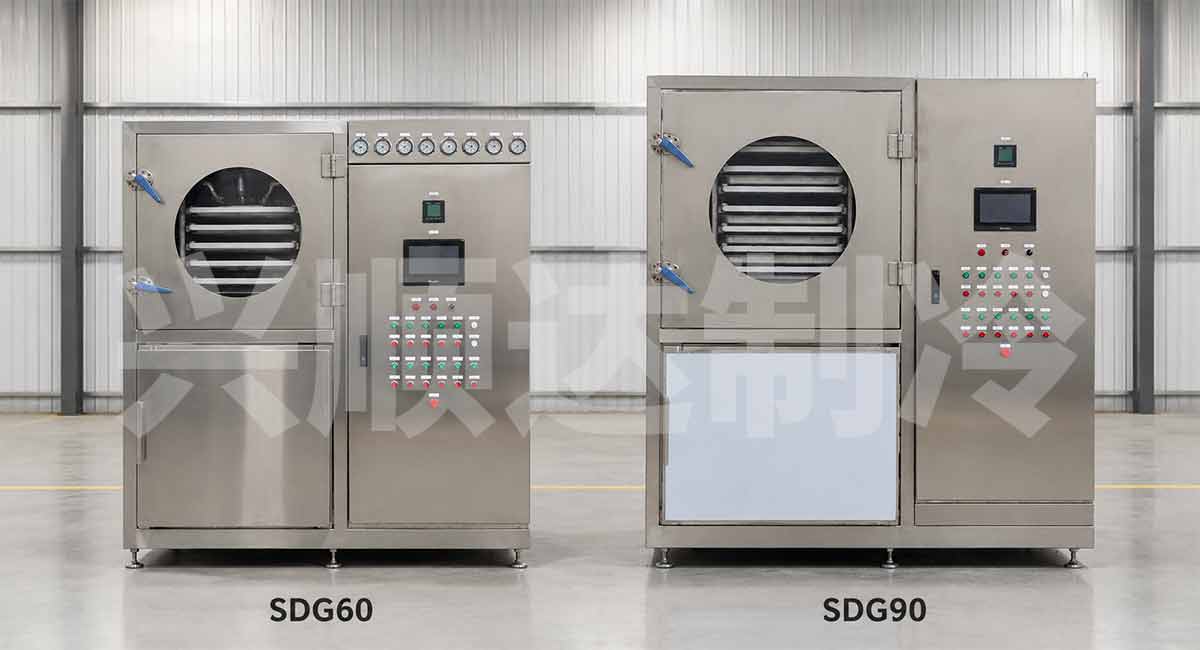
The manufacturer’s lab and pilot freeze dryer range provides a starting point for sample testing. However, buyers should confirm floral suitability from proposed load dimensions, test records and finished samples rather than assume that a food application transfers directly.
Condenser and Vacuum Performance: What the Buyer Should Check
Water vapor leaving frozen flowers must travel through the equipment, and the condenser must capture it. Therefore, a buyer should evaluate the vacuum system and condenser as a working combination rather than compare only the lowest advertised vacuum number. Moreover, the equipment-design literature supports asking for dryer-specific capacity and pressure-control evidence, while buyers should not present its pharmaceutical test conditions as a flower specification.[4]
- Condenser capacity: request the expected ice load per cycle, the test load used to support it and the available operating margin.
- Condenser behaviour: ask how temperature and pressure behave under the proposed floral load, not only at an unloaded condition.
- Vacuum stability: require a record of pressure control through the relevant drying stages and an explanation of alarms.
- Leak integrity: confirm the test method for chamber, seals, valves, fittings and vacuum connections.
- Service access: check how the pump, refrigeration system, condenser and defrost path are inspected and maintained.
The site’s guides to the freeze dryer condenser and vacuum pump for freeze dryers provide component-level questions for the RFQ.
How Long Does It Take to Freeze Dry Flowers?
There is no defensible single cycle time for every flower or bouquet. Instead, drying time changes with species, bloom size, stem mass, initial water, loading density, arrangement geometry, freezing conditions, shelf temperature, chamber pressure and the chosen endpoint.
The slowest or thickest part of a complete bouquet may determine the cycle even when exposed petals look dry earlier. Published flower studies show that vacuum-drying temperature, material thickness and shelf-heating program can affect drying behaviour and final quality.[2][3]
Pilot Freeze Dryer vs Commercial Floral Freeze Dryer
A small preservation studio and a high-volume floral service do not need the same system. First, a pilot machine is useful when the main uncertainty is process development. Then, a commercial machine becomes appropriate when the process is repeatable and demand requires more usable chamber space, more simultaneous batches or better seasonal capacity.
| Decision stage | Best use of equipment | Main question to answer |
|---|---|---|
| Feasibility | Lab or pilot test | Can the target flowers be dried to an acceptable appearance and endpoint? |
| Process development | Repeated pilot batches | Which loading pattern and process window produce repeatable quality? |
| Commercial launch | Small commercial system | Can weekly orders be completed with enough turnaround margin? |
| Scale-up | Larger or multiple chambers | Is one large chamber or parallel batch capacity more resilient for seasonal demand? |
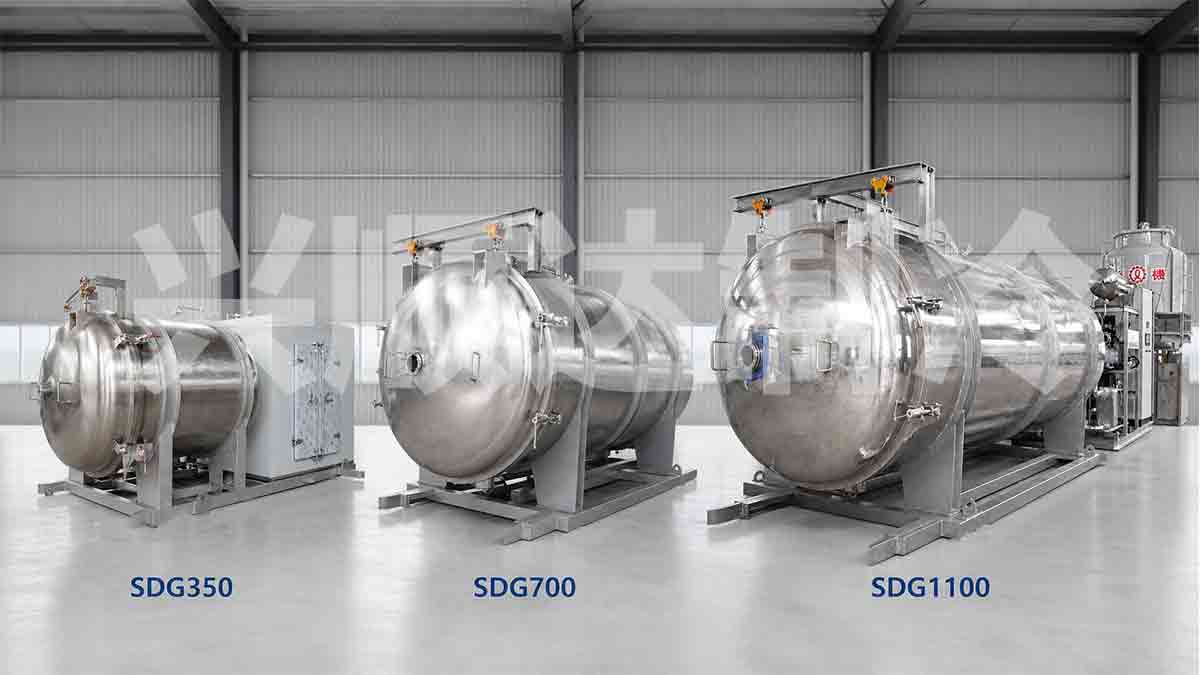
Buyers preparing to scale beyond pilot work can compare the manufacturer’s commercial freeze dryer systems. Therefore, buyers should base the final configuration on floral-specific test data, chamber layout, utilities and target order volume.
How to Calculate Capacity for a Flower Preservation Business
A useful capacity model begins with customer orders, not a catalogue capacity number. First, determine how many representative bouquets fit in a qualified batch without crowding. Then, combine the validated cycle with loading, unloading, inspection, defrost and preparation time.
Step 1: Required batches per week
Required batches/week = Weekly bouquet orders ÷ Qualified bouquets/batch
Step 2: Available batches per chamber
Available batches/week = 7 ÷ (Validated cycle days + Turnaround days)
Step 3: Chambers required
Required chambers = CEILING(Required batches/week ÷ Available batches/week/chamber)
Illustrative planning example
Suppose a representative test confirms that 12 bouquets fit safely in one batch. If the business receives 30 bouquets per week, it needs 2.5 batches per week. If the validated cycle and turnaround together occupy 2 days, one chamber can complete about 3.5 batches per week in theory. That simplified model suggests one chamber may cover average demand. However, the business still needs to test peak-season margin, rework, maintenance and scheduling risk.
This is a planning method, not a production guarantee. The 12-bouquet, 30-order and 2-day figures are illustrative assumptions, not company performance data.
Can a Food Freeze Dryer Be Used for Flowers?
Potentially, yes—but only if the machine’s physical layout and controls suit the floral load. “Food freeze dryer” does not automatically mean unsuitable for flowers, and “floral” on a label does not automatically prove superior results.
Compare usable chamber height, shelf removability, spacing, temperature control, vacuum system, condenser capability, data recording, cleaning access and the proposed test protocol. Most importantly, test the intended flower or bouquet before promising commercial output. The site’s freeze dryer specifications guide explains how to evaluate equipment beyond marketing labels.
What Should Be Tested Before Buying Floral Freeze Drying Equipment?
A serious equipment evaluation should produce a small evidence package instead of a single “before and after” photo. As a result, the buyer can scale up more confidently and compare suppliers using the same load description and acceptance criteria.
- Flower species, variety and bloom stage
- Incoming condition and pretreatment
- Maximum bouquet diameter and height
- Fresh product weight and water-load estimate
- Pre-freezing method and freezing evidence
- Pieces per batch and loading map
- Shelf and chamber temperature history
- Chamber pressure and alarm history
- Condenser response under load
- Total cycle and turnaround time
- Final dryness or moisture criterion
- Colour, shape, brittleness and breakage
- Packaging and storage conditions
- Release photos and non-conformance notes
The flower literature supports evaluating colour, residual moisture, mechanical strength and microstructure—not simply whether a cycle has ended.[2][3] For process records and formal acceptance planning, review the site’s freeze dryer monitoring and freeze dryer validation and FAT/SAT guide; adapt the acceptance criteria to the floral product rather than copying food criteria.
Request a Floral Freeze-Drying Feasibility Review
Buyers can send the flower type, maximum bouquet dimensions, typical weekly order volume, target finished appearance, country and available power supply. The engineering team can then identify the missing sample data and review chamber fit, pilot-test needs, vapor-load questions and the likely equipment class before discussing a final configuration.
Send Flower Project DetailsHandling, Packaging and Storage After the Cycle
A finished flower can look dry and still be vulnerable during unloading, assembly, transport and display. Because mechanical strength is one of the quality attributes affected by freeze-drying conditions in flower studies, the commercial release checklist should extend beyond the dryer door.[2]
- Inspect petals, stems and supports before moving the batch to finishing.
- Record the packing material, sealing method, storage environment and time between unloading and packing.
- Protect the product from unnecessary impact, moisture exposure and temperature swings during transport.
- Use customer-facing photos and handling instructions that match the validated product condition.
- Investigate any colour shift, softening, moisture pickup or breakage as a process or handling non-conformance.
These are release and risk-control questions, not a universal shelf-life promise. Therefore, a business should validate the packaging and storage combination for its flower type, destination and display period.
How to Compare Floral Freeze Dryer Suppliers
The strongest supplier comparison starts with measurable project requirements. Therefore, ask each supplier to respond to the same flower description, load geometry, proposed cycle and acceptance criteria. A catalogue page is useful for screening; however, it cannot replace a representative test.
| Check | Why it matters | Evidence to request |
|---|---|---|
| Usable chamber dimensions | Determines whether whole bouquets physically fit | Internal drawings or dimensioned chamber layout |
| Shelf configuration | Controls vertical clearance and load flexibility | Shelf spacing, removable/adjustable options and usable positions |
| Condenser and vacuum system | Supports stable vapor removal under the proposed load | Rated performance plus data from a representative or clearly scoped test |
| Control and records | Helps reproduce successful batches and diagnose failures | Trend screens, alarm logic and exportable batch records if offered |
| Pilot testing | Reduces the risk of buying around an unproven recipe | Test protocol, loading photos, cycle data, finished samples and acceptance result |
| After-sales support | Commercial downtime affects delivery commitments | Spare-parts plan, commissioning, training and support scope |
A broader procurement checklist is available in the guide to choosing a freeze dryer manufacturer. For a floral project, buyers should combine that general supplier review with a representative load test and clearly defined flower-specific acceptance criteria.
Information to Send Before Requesting a Quote
Better project data produces a more useful quotation. A floral preservation business should prepare:
- Flower species and whether loads are single blooms, stems, components or complete bouquets.
- Maximum and typical bouquet dimensions, including stem length and loading orientation.
- Typical and peak bouquets per day or week, with seasonal variation.
- Representative fresh weight per bouquet and any available water-load estimate.
- Existing pretreatment, support and pre-freezing method.
- Target appearance, acceptable breakage, dryness criteria and storage period.
- Country, site voltage/frequency, installation space, access constraints and utilities.
- Whether the buyer needs pilot testing, process development, installation, training or batch records.
In addition, the project team should review power, heat rejection, ventilation, drainage/defrost handling, vacuum-pump placement, maintenance clearance and material flow early. The commercial freeze dryer setup guide covers these planning questions, while the commercial freeze dryer price guide should own budget and cost intent.
Floral Freeze Dryer FAQ
Can flowers be freeze-dried?
Yes. Operators can test many flowers by freeze drying, and horticultural guidance describes the method as capable of producing natural-looking preserved plant material. Results still depend on condition, species, structure, loading, process settings and handling.
What is the best freeze dryer for flowers?
There is no universal best machine. The correct system has enough usable space and shelf clearance, suitable vapor-removal and pressure-control evidence, appropriate records, and a floral-specific test that meets the buyer’s acceptance criteria.
How long does it take to freeze dry flowers?
Cycle time varies with species, bloom thickness, stems, bouquet geometry, loading density, freezing conditions, pressure, temperature and endpoint. A supplier should not promise one fixed time for every floral load without representative testing.
Can a commercial food freeze dryer be used for flower preservation?
Buyers can consider it if its chamber geometry, shelf configuration, controls, condenser and vacuum system fit the floral process. Therefore, the buyer should test the intended flower or bouquet before promising production capacity.
How many bouquets can a floral freeze dryer hold?
The answer depends on bouquet diameter, height, loading orientation, required spacing, shelf arrangement and the specific chamber. A qualified test load should establish bouquets per batch; nominal kg capacity alone is not enough.
What should a buyer send to get an accurate floral freeze dryer quote?
Send flower type, maximum bouquet dimensions, expected weekly volume, fresh weight if available, target appearance, location, power supply, installation constraints and whether pilot testing or process-development support is required.
Is a floral freeze dryer profitable?
Profitability depends on local selling price, order volume, labour, electricity, consumables, rejects, financing, maintenance, cycle duration, pieces per batch and seasonality. Therefore, buyers should size equipment from a realistic order model rather than supplier revenue claims.
Technical References
- University of Florida IFAS Extension. Drying and Preserving Plant Materials for Decorative Uses. Extension publication used for general ornamental-plant preservation context. This is not a journal paper and therefore has no DOI.
- Chen, W., Gast, K. L. B., & Smithey, S. (2000). The effects of different freeze-drying processes on the moisture content, colour and physical strength of roses and carnations. Scientia Horticulturae, 84(3–4), 321–332. DOI: 10.1016/S0304-4238(99)00106-5.
- 陈柏楠, 杨豪, 包韫辉, 赵斗, 陈洪国, 曾祥玲, 杨洁. 不同工艺真空冷冻干燥桂花的品质比较分析[J]. 现代食品科技, 2021, 37(2): 205–212, 307. DOI: 10.13982/j.mfst.1673-9078.2021.2.0743.
- Tchessalov, S., Maglio, V., Kazarin, P., Alexeenko, A., Bhatnagar, B., Sahni, E., & Shalaev, E. (2023). Practical Advice on Scientific Design of Freeze-Drying Process: 2023 Update. Pharmaceutical Research, 40, 2433–2455. DOI: 10.1007/s11095-023-03607-9.
The flower studies support flower-specific process and quality decisions. Their experimental temperatures, times, materials and equipment are not universal production settings. Finally, this article uses the pharmaceutical process-design paper only for general freeze-dryer engineering principles; it does not transfer the paper’s numerical conditions to floral production.

Technical review: Zheng Wei
Freeze-Drying Engineer at Fuzhou Xing Shun Da Refrigeration Facility Project Co., Ltd. The engineering focus includes equipment selection, pilot testing, batch process evaluation and commercial freeze-drying scale-up.
Planning a Flower Preservation Project?
A useful first discussion does not require a finished specification. The buyer can send representative flower photos, bouquet dimensions, weekly volume, country and available utilities. As a result, those inputs allow the manufacturer to identify the most important feasibility questions before proposing a machine size.
Request a Project Review