
Freeze Dryer New Zealand: Commercial & Industrial Buying Guide for Food Producers

A freeze dryer New Zealand search mixes home appliances, laboratory units, contract processors and factory equipment. For a food producer, the useful comparison is prepared wet input, product-specific cycle evidence, condenser duty, factory utilities, landed project cost and clearly assigned installation support.
Quick answer: choosing a freeze dryer in New Zealand
A freeze dryer New Zealand project should begin with the product and production duty. Pilot equipment is generally suitable when the recipe, loading depth, drying endpoint or market demand remains uncertain. Commercial equipment becomes relevant when validated production is expected to run regularly. By contrast, an industrial system is usually considered after confirmed demand, utilities, handling and packaging can support tonne-scale production.
Alternatively, contract freeze drying can reduce early capital risk, while pilot trials can establish the evidence needed for a more reliable equipment quotation. Therefore, the decision should follow product data and sales demand rather than tray count alone.
Buy a machine, use contract freeze drying or run pilot tests?
New Zealand buyers commonly follow three routes. Contract processing can suit an early product with irregular orders. Meanwhile, pilot ownership supports recipe work and customer samples. An in-house commercial or industrial line becomes more relevant when production is recurring.
Contract freeze drying
For example, contract processing can be useful when demand is uncertain, capital is limited or the product still needs development. The buyer should compare minimum batch size, queue time, product loss, confidentiality, cleaning controls and packaging responsibility.
Pilot testing
Meanwhile, pilot testing can confirm preparation, loading, cycle time, yield, final moisture, centre dryness, sensory quality and rehydration before equipment capacity is fixed.
In-house production
In contrast, in-house production can be more attractive when batches are frequent, formulations are confidential, delays are costly or the business needs direct control over scheduling, batch records and packaging.
The detailed contract freeze-drying services versus equipment guide provides a broader make-or-buy framework. In either case, product testing should come before a final capacity commitment.
Home, pilot, commercial and industrial freeze dryers are not equivalent
Searches such as “freeze dryer NZ,” “freeze dryer machine NZ” and “freeze dryer for sale New Zealand” return home appliances, laboratory units, contract processors and factory equipment. Therefore, a buyer seeking a commercial freeze dryer New Zealand supplier or planning an industrial freeze dryer New Zealand project should separate these categories before comparing quotations.
Although these systems can all remove moisture under vacuum, they differ in water-removal duty, production controls, cleanability, records, service access and realistic daily output.
| Equipment class | Typical role | Capacity basis | Key purchasing question |
|---|---|---|---|
| Home / benchtop | Household use, very small batches or early demonstrations | Often described by tray count or batch load | Can the system support the production schedule, records and service expectations of a food business? |
| Laboratory / pilot | R&D, samples, process development and limited production | 60–120 kg prepared wet material per 24 hours for the referenced models | Does its heating, condenser, vacuum and monitoring logic support later scale-up? |
| Commercial | Regular food production from hundreds of kilograms to about 1.36 tonnes per day | Prepared wet-material input under defined product assumptions | Can loaded condenser and vacuum performance support the quoted cycle? |
| Industrial | Multi-tonne schedules and factory-integrated production | 1.2–8 tonnes prepared wet material per 24 hours for the referenced models | Are steam, cooling, handling, defrosting and production continuity planned as one system? |
The lab and pilot models, commercial freeze dryers and industrial freeze dryers should therefore be compared by production duty rather than by machine appearance.
Calculate New Zealand freeze dryer capacity from wet product input
Daily dried-product weight alone is not enough for sizing. In particular, the calculation needs prepared wet input, initial moisture or solids, product dimensions, loading density and target final moisture. It should also account for the number of complete batches the factory can realistically turn around. Food structure, layer thickness, freezing conditions and dry-layer resistance can all change the drying rate, so one cycle should not be applied to every product.[1][2]
Start with product-specific loading
The three manufacturer case studies later in this guide used 11.6–12 kg/m², but those figures belong to the named blueberry, pear and shrimp conditions. However, waxy skins, sugar, fat, formulation and cut geometry change vapour paths and collapse risk. A whole berry should not be sized from an apple-slice cycle. Likewise, published fruit experiments show that different foods can respond differently to the same shelf-temperature programme.[3]
Use complete turnaround, not drying time alone
The linked manufacturer model pages use 8–15 hours as a planning range that should be confirmed through product testing. In addition, a production schedule should include loading, pull-down, pressure release, unloading, condenser defrosting, inspection and cleaning. Monitoring research shows that the endpoint response varies with cycle setup, loading and product type. Consequently, a quoted 12-hour drying stage does not automatically support two complete batches per day.[4]
Check water load against the condenser
The expected water removed from each batch should be compared with condenser capture rate, total ice capacity and defrost strategy. During primary drying, the condenser needs sufficient capacity for the expected vapour load. Therefore, shelf area alone is insufficient for establishing production capacity.[2] The freeze dryer condenser guide lists the supplier data to request.
Freeze dryer models for New Zealand food production
The following comparison helps a New Zealand buyer narrow the equipment class. Accordingly, a product and utility review should follow because capacity, power and steam demand are connected.
| Model | Prepared wet input / 24 h | Installed power reference | Typical project role |
|---|---|---|---|
| SDG60 | 60–80 kg | 11 kW | Product trials, samples and process development |
| SDG90 | 90–120 kg | 15.8 kW | Pilot production and scale-up data |
| SDG350 | 340–450 kg | 58.16 kW | Entry commercial production |
| SDG700 | 680–900 kg | 111.6 kW | Regular commercial food lines |
| SDG1100 | 1.02–1.36 t | 155.9 kW | Larger commercial production |
| SDG1600 | 1.2–2 t | 148 kW + up to 150 kg/h steam | Industrial production with steam-supported heating |
| SDG3000 | 3–4 t | 279.7 kW + up to 300 kg/h steam | Multi-tonne factory schedules |
| SDG6000 | 6–8 t | 510.2 kW + up to 600 kg/h steam | Large industrial food projects |
The manufacturer’s commercial model page uses 1.7 kWh/kg wet material as an average planning reference. Its industrial model page uses 1.1 kWh electricity plus 1.5 kg steam/kg wet material. However, these are supplier references rather than independent benchmarks. Therefore, the buyer should request the test product, batch load, endpoint, meter boundary and defrost allocation behind any energy claim.
Freeze dryer New Zealand prices and landed project cost
A catalogue price does not represent the commissioned project cost. Therefore, a New Zealand quotation should separate the equipment package from freight, border processing, local services, installation and production start-up.
| System category | Manufacturer equipment reference | Commonly outside the base quotation |
|---|---|---|
| Laboratory / pilot | About RMB 280,000–310,000; approximately US$39,000–43,000 before freight and local project costs | Freight, customs processing, local electrical work, commissioning and product trials |
| Commercial | About US$75,000–193,000 | Cooling system, piping, unloading, inland transport, installation, training and GST |
| Industrial | About US$235,000–542,000 | Steam plant, cooling tower, factory works, rigging, commissioning and line integration |
These figures are manufacturer references rather than New Zealand market averages. Moreover, final pricing depends on model, condenser and vacuum configuration, heating method, controls, voltage, documentation, spares and service scope. The buyer should use the exchange rate at quotation and compare the same Incoterm and delivery boundary. For a fuller cost model, see the industrial freeze-dryer cost calculation guide.
Build a line-item landed-cost worksheet
- Equipment, optional systems, initial spares and export packaging
- International freight, insurance and port handling
- Customs entry, broker fees, applicable duty and border levies
- GST cash-flow treatment and accounting advice
- MPI-related inspection or treatment where applicable
- Inland transport, crane, forklift, rigging and site access
- Electrical distribution, cooling water, steam, drainage and pipework
- Installation supervision, SAT, operator training and first-batch support
- Packaging equipment, moisture-barrier materials and dry-product storage
New Zealand Customs states that imported goods may incur 15% GST, duty where applicable and border-related levies. In addition, import declarations are generally required for goods with a Customs value above NZ$1,000.
Because tariff treatment and GST recovery depend on the transaction and importer, the buyer should confirm the calculation with a New Zealand customs broker and accountant before issuing the purchase order. See the official New Zealand Customs business import guidance and import declaration fact sheet.
New Zealand freeze dryer import, electrical and food-business checks
For a freeze dryer New Zealand import, compliance responsibilities should be assigned before shipment. The overseas manufacturer can provide technical files and test evidence. Meanwhile, the New Zealand importer and locally licensed specialists should confirm the requirements that apply to the specific machine, supply arrangement and installation.
Electrical supply and product documentation
WorkSafe identifies 230 V single-phase and 400 V multi-phase at 50 Hz as standard New Zealand mains supplies for domestic and similar products. However, industrial-only equipment has a different responsibility context. A factory buyer should not assume that a household-appliance pathway automatically applies to a large industrial system.
Accordingly, the site electrician should confirm voltage, frequency, phase, earthing, protection, isolation, cable size, starting loads and switchboard capacity. The official starting point is WorkSafe electrical safety compliance guidance.
A Supplier Declaration of Conformity is required for declared medium-risk articles supplied in New Zealand, while other pathways apply to high-risk or non-declared equipment. Therefore, the importer should confirm the machine’s classification and required evidence rather than relying only on a CE mark. A general statement that every freeze dryer follows the same route is not sufficient. WorkSafe provides further information on Supplier Declarations of Conformity and high- and medium-risk products.
Machinery cleanliness and wood packaging
MPI notes that imported machinery and parts can carry soil, plant material or organisms. Equipment should be cleaned before dispatch, and the importer should check the relevant Import Health Standard and declaration requirements. In addition, wooden crates, pallets, dunnage and spacers may need treatment and ISPM 15 marking. Relevant sources include MPI’s machinery import process and wood-packaging guidance.
Food controls belong to the production system
A hygienic chamber, suitable food-contact surfaces, drainage and cleaning access support a food-safety programme. However, the machine does not certify the final process. MPI explains that higher-risk food businesses may need a Food Control Plan, while other activities may operate under a National Programme. Therefore, the operator should use MPI’s rules tool and local verifier to determine the applicable route. See MPI Food Control Plan guidance.
Confirm site utilities and installation before ordering
Large equipment can arrive in several shipping units, while refrigeration, vacuum, heating, water and controls need to operate as one system. As a result, site planning should start before the final quotation rather than after the vessel reaches New Zealand.
Electrical and heat rejection
The review should record available voltage, phase, frequency, peak demand, motor-starting load and switchboard margin. Furthermore, it should confirm cooling-water inlet temperature, flow, treatment, pump redundancy and heat rejection. Air-cooled options may be considered for smaller systems, but actual capacity depends on ambient conditions and refrigeration design.
Access, structure and drainage
The factory should check floor loading, foundations, door openings, crane or forklift access, ceiling height, drainage and component-removal paths. In addition, a New Zealand engineer should review the installed arrangement where local building or seismic-restraint considerations apply.
Production-room flow
Preprocessing, pre-freezing, loading, drying, unloading and barrier packaging should follow a practical flow. Because dry product absorbs moisture quickly, packaging capacity should match unloading speed. The commercial freeze dryer setup guide provides a more detailed utility and responsibility matrix.
Match the freeze dryer to New Zealand food products
New Zealand projects may involve fruit, seafood, meat, pet food, dairy ingredients, cooked meals or botanical extracts. However, even when the same chamber processes several product families, each formulation needs its own preparation and cycle evidence.
Kiwifruit, apples and berries
Fruit sugar, acidity, waxy skins and cut geometry influence vapour movement and collapse risk. For example, sliced products often dry more predictably than whole fruit. The linked Czech blueberry case used controlled skin perforation, but a New Zealand product still needs its own pretreatment trial and quality endpoint.
Seafood, meat and pet food
These products require disciplined raw-material temperature control because freeze drying does not remove the need for pathogen management. Therefore, the named shrimp case should be used as a trial reference rather than a universal thickness or loading rule. For fatty products, packaging specifications should address both moisture ingress and oxygen exposure; final moisture alone does not establish storage stability. The freeze-dried food packaging guide provides a separate packaging decision framework.
Dairy, meals and extracts
Liquids and extracts can foam, form surface crusts or resist vapour flow when tray depth is excessive. By contrast, some cooked meals may be porous and dry relatively quickly, whereas viscous products or concentrated extracts may need longer cycles. Therefore, trials should confirm solids, tray depth, freezing structure, centre dryness, rehydration and batch consistency.
Verify performance before shipment and after installation
Minimum condenser temperature and an empty-chamber vacuum value are useful equipment checks, but they do not prove loaded food performance. Therefore, a buyer should request comparable product data and agree acceptance criteria before the final payment schedule.
Product trial evidence
- Raw material, recipe, cut size and pretreatment
- Wet load per tray and loading density per square metre
- Freezing method, drying time and complete turnaround
- Product temperature, chamber pressure and condenser trend
- Final moisture, centre dryness and mass stability
- Appearance, texture, sensory result and rehydration
- Packaging method and batch-to-batch consistency
FAT and SAT
Factory Acceptance Testing should verify construction, controls, alarms, vacuum integrity, condenser operation, records and agreed documents before dispatch. After installation, Site Acceptance Testing should confirm local utilities, safety interlocks, operator training and agreed production checks in New Zealand. The food freeze dryer FAT and SAT guide gives a practical acceptance framework.
The three manufacturer cases in this guide report loaded operating ranges within 26–100 Pa. This is case evidence rather than a universal setpoint. Accordingly, the quotation should identify the pressure-sensor type, vacuum-pump group, pull-down acceptance test and loaded operating range.
Monitoring methods should also be assessed for the actual product because probes and pressure responses can behave differently with product type and loading.[4] See the freeze dryer vacuum pump guide for the main checks.
How to compare New Zealand freeze dryer suppliers
For a freeze dryer New Zealand comparison, local manufacturing can simplify site support. However, imported equipment may offer a different balance of capacity, price and configuration. In either case, the comparison should use the same performance basis and delivery boundary.
| Evaluation item | What the buyer should request | Why it matters |
|---|---|---|
| Capacity | Prepared wet input, solids, shelf area, loading and realistic batches | Prevents comparison of unrelated tray-count claims |
| Condenser | Capture rate, total ice capacity, loaded temperature and defrost method | Shows whether vapour can be removed through the full cycle |
| Vacuum | Pump group, gauge type, pull-down time and operating pressure | Supports repeatable pressure control and diagnosis |
| Controls | Recipes, trends, alarms, user access, batch records and remote support | Supports production management and troubleshooting |
| Delivery | Incoterms, packing list, shipping split, exclusions and documentation | Clarifies landed cost and importer responsibilities |
| Commissioning | FAT, SAT, training, first-batch support and acceptance criteria | Connects equipment delivery with usable production |
| After-sales | Critical spares, response method, warranty boundary and local contractor roles | Reduces ambiguity after handover |
A credible overseas scope identifies which tasks belong to the manufacturer, importer, licensed electrician, refrigeration technician, rigger, structural engineer and food-safety team. Remote support can assist diagnosis and process work. Nevertheless, it does not replace locally licensed work. Use the freeze-dryer manufacturer evaluation guide for a broader supplier audit.
Comparable food-production references
The following manufacturer-published cases show how loading, preparation and product structure affect equipment selection. They are international company case references rather than independent trials or New Zealand installations. Consequently, the buyer should request raw batch records, instrument calibration and an agreed product trial before treating a comparable result as acceptance evidence.
| Product and project | System | Loading and time | Final moisture | Selection lesson |
|---|---|---|---|---|
| Blueberries, Czech Republic | SDG1100, 30 m² | 12 kg/m²; 13 h | 1.97% | Skin preparation can be as important as nominal chamber size. |
| Pear slices, Oregon, USA | SDG3000, 100 m² | 12 kg/m²; 12 h | 2.21% | Defined thickness and loading support a more predictable scale calculation. |
| Shrimp, Kochi, India | SDG6000, 200 m² | 11.6 kg/m²; 8 h | 1.68% | Product geometry and preparation can support shorter industrial cycles. |
New Zealand freeze dryer procurement checklist
- Define the product, recipe, cut size and daily prepared wet-material input.
- Record initial moisture or solids and the target final moisture.
- Confirm loading density, shelf area and realistic complete batches per day.
- Compare condenser water-removal duty rather than tray count alone.
- Request the vacuum-pump group, gauge type and pull-down evidence.
- Ask for comparable product-trial data with centre-dryness checks.
- Confirm 230/400 V, 50 Hz compatibility and the site’s actual supply.
- Assign electrical classification, documentation and importer responsibilities.
- Check MPI machinery cleanliness and ISPM 15 packaging requirements.
- Prepare a line-item landed-cost estimate, including GST cash flow.
- Confirm cooling water, steam, drainage, floor loading and service access.
- Review food-contact surfaces, cleanability and condensate drainage.
- Agree FAT, SAT, training and first-batch support before final payment.
- Order critical spares and define local and remote service boundaries.
- Confirm barrier-packaging capacity before production begins.
Frequently asked questions
Cost, import and capacity
How much does a commercial freeze dryer cost in New Zealand?
Manufacturer reference prices for commercial systems are about US$75,000–193,000 before freight, customs processing, applicable duty, GST, inland delivery, utilities, installation and commissioning. Therefore, a useful comparison is the landed and commissioned cost for a defined wet-material capacity rather than the base machine price alone.
Can a food business import a freeze dryer into New Zealand?
Imported equipment can be considered, although the importer should confirm Customs, MPI biosecurity, wood packaging, electrical documentation and local installation requirements before shipment. The purchase order should identify who supplies each document and who performs locally licensed work.
What size freeze dryer does a food producer need?
The selection depends on prepared wet input per day, initial moisture, product thickness, loading density, cycle time, complete turnaround and production schedule. Pilot systems cover the referenced 60–120 kg/day range, commercial models cover about 340 kg–1.36 t/day, and industrial models cover about 1.2–8 t/day under defined assumptions.
Production and installation
Should a startup use contract freeze drying first?
Contract drying or pilot trials can be useful when demand, formulation or packaging is not yet confirmed. Ownership may become more attractive when batches are frequent, scheduling control matters, confidentiality is important or outsourcing costs and delays constrain growth.
Does a New Zealand freeze dryer need 400 V, 50 Hz?
Many commercial and industrial systems use multi-phase power, and New Zealand’s standard multi-phase supply is commonly 400 V at 50 Hz. However, the site electrician should confirm the actual supply, protection, starting load and connection requirements for the selected model.
How long does installation and commissioning take?
The schedule depends on machine size, shipping split, site readiness, cooling and steam systems, electrical work, rigging and the scope of product trials. A project plan should separate unloading, mechanical installation, utility connection, safety checks, SAT, operator training and first-batch support.
References and official sources
- Nowak D, Jakubczyk E. The Freeze-Drying of Foods—The Characteristic of the Process Course and the Effect of Its Parameters on the Physical Properties of Food Materials. Foods. 2020;9(10):1488. The Freeze-Drying of Foods — DOI: 10.3390/foods9101488
- Ratti C. Freeze drying for food powder production. In: Bhandari B, Bansal N, Zhang M, Schuck P, eds. Handbook of Food Powders. Woodhead Publishing; 2013:57–84. Freeze Drying for Food Powder Production — DOI: 10.1533/9780857098672.1.57
- Khalloufi S, Ratti C. Quality Deterioration of Freeze-dried Foods as Explained by their Glass Transition Temperature and Internal Structure. Journal of Food Science. 2003;68(3):892–903. Quality Deterioration of Freeze-Dried Foods — DOI: 10.1111/j.1365-2621.2003.tb08262.x
- Pisano R, Barresi AA, Fissore D. Innovation in Monitoring Food Freeze Drying. Drying Technology. 2011;29(16):1920–1931. Innovation in Monitoring Food Freeze Drying — DOI: 10.1080/07373937.2011.596299
- Reddy KBPK, Awasthi SP, Madhu AN, Prapulla SG. Role of Cryoprotectants on the Viability and Functional Properties of Probiotic Lactic Acid Bacteria during Freeze Drying. Food Biotechnology. 2009;23(3):243–265. Role of Cryoprotectants on Probiotic Lactic Acid Bacteria During Freeze Drying — DOI: 10.1080/08905430903106811
- WorkSafe New Zealand. Electrical safety compliance: core requirements.
- WorkSafe New Zealand. Supplier Declaration of Conformity.
- New Zealand Customs Service. Import guidance for businesses.
- New Zealand Customs Service. Import declaration requirements, updated April 2026.
- Ministry for Primary Industries. Steps to importing vehicles, machinery or equipment.
- Ministry for Primary Industries. Steps to importing wood packaging.
- Ministry for Primary Industries. Food control plans.
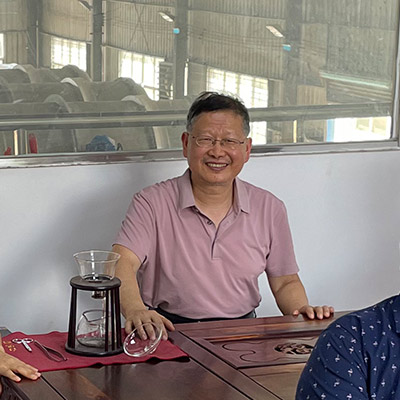
About the author: Zheng Wei
Founder & Freeze-Drying System Engineer
Fuzhou Xing Shun Da Refrigeration Facility Project Co., Ltd.
Zheng Wei participates in the manufacturer’s freeze-drying projects, including product trials, equipment selection, vacuum-system configuration, refrigeration planning, installation guidance and drying-process optimisation. The project experience covers fruit, vegetables, cooked meals, meat, seafood and botanical products. Review the manufacturer’s engineering and project background for additional company information.