
How to Choose Vacuum Freeze Dryer Manufacturers for Food Production
Choosing between vacuum freeze dryer manufacturers is not only a price comparison. For food producers, the manufacturer must understand product testing, wet material capacity, condenser load, vacuum stability, refrigeration design, heating control, installation, operator training, and long-term service. The vacuum freeze dryer equipment guide provides the system-fit checklist to complete before manufacturer comparison.
A reliable vacuum freeze dryer manufacturer should help a food business answer practical production questions. How much wet material can the machine process per day? How long will one batch take? Can the condenser capture water vapor fast enough? Will the vacuum reading stay reliable during sublimation? Can the operator record and export drying curves from the HMI?
What Is a Vacuum Freeze Dryer Manufacturer?
A vacuum freeze dryer manufacturer designs and builds equipment that removes moisture by freezing the product, reducing chamber pressure, and allowing ice to sublimate into vapor. The vapor then moves to the condenser, where it freezes on the cold surface.
However, a real manufacturer does more than build the drying chamber. A complete food freeze-drying system includes the chamber, shelves, heating system, condenser, refrigeration unit, vacuum system, control cabinet, HMI, piping, valves, safety protection, installation support, and process training.
Therefore, buyers should not evaluate a manufacturer only by tray area or machine price. Instead, they should check whether the manufacturer can explain how each system affects real food production.
What Types of Vacuum Freeze Dryers Do Manufacturers Offer?
Different food businesses need different equipment sizes. A good manufacturer should recommend a model based on product behavior, wet material capacity, drying time, and factory conditions.
Laboratory and Pilot Vacuum Freeze Dryers
A lab and pilot freeze dryer is suitable for sample testing, product development, recipe validation, and small-batch production. It helps food companies test drying time, slice thickness, final moisture, color, texture, and rehydration before scaling up.
This step is especially important for new products. A responsible manufacturer should not recommend a large machine before the product has been tested.
Commercial Vacuum Freeze Dryers
A commercial freeze dryer is suitable for small and medium food factories. It can support freeze-dried fruit, vegetables, pet food, instant meals, seafood ingredients, herbs, and other value-added foods.
At this stage, buyers should look beyond the chamber size. They should compare batch capacity, energy use, condenser performance, operation training, and after-sales support.
Industrial Vacuum Freeze Dryers
An industrial freeze dryer is designed for large-scale food production. These projects often require factory layout planning, steam or high-power electrical supply, cooling water, drainage, loading access, installation space, and operator training.
For industrial projects, a simple standard quotation is usually not enough. The manufacturer should provide a project-based proposal after reviewing the product, capacity target, utility conditions, and site requirements.
Key Systems to Check Before Choosing a Vacuum Freeze Dryer Manufacturer
Many vacuum freeze dryer manufacturers can provide attractive brochures. However, real production performance depends on system design. Buyers should check the following parts carefully.
Drying Chamber Design and Tray Loading
The drying chamber must support stable vacuum, easy cleaning, and efficient batch handling. For food production, buyers should check the chamber material, welding quality, tray cart design, shelf structure, door sealing, and cleaning access.
Tray loading also affects production efficiency. If the chamber layout is difficult to load or unload, operators lose time between batches. In addition, poor chamber structure may create uneven drying or maintenance problems later.
Condenser Capacity and Water Capture Performance
The condenser is one of the most important parts of a vacuum freeze dryer. During primary drying, frozen water leaves the product as vapor. The condenser must capture that vapor fast enough to keep the chamber pressure stable.
Some low-cost machines reduce manufacturing cost by using a smaller condenser area. However, this can slow water vapor capture, extend drying time, and make the vacuum curve harder to control.
Therefore, buyers should ask the manufacturer about condenser area, water capture capacity, defrost method, refrigeration matching, and expected ice load per batch. A machine with the same tray area can perform very differently if the condenser is undersized.
For a deeper technical explanation, buyers can read this guide on freeze dryer condenser design.
Vacuum System Stability
A vacuum freeze dryer needs a stable vacuum system during sublimation. Buyers should ask about pump configuration, piping design, valve selection, leak control, vacuum reaching time, and pressure stability under real loaded conditions.
The supplier should not only report empty-chamber vacuum data. Food producers need to know how the system performs when water vapor continuously leaves the product.

Vacuum Gauge Accuracy and Water Vapor Interference
Vacuum gauge accuracy is often ignored when buyers compare vacuum freeze dryer manufacturers. Yet it directly affects process judgment.
Some low-cost systems use basic Pirani gauges or thermocouple vacuum gauges. In practical freeze-drying applications, Pirani gauge deviation can exceed 15%, while thermocouple gauge deviation can reach about 20% under changing gas conditions. During food freeze drying, water vapor is continuously released during sublimation. As a result, indirect gauges may show even larger deviation.
This can mislead operators. The HMI may show a stable pressure reading, but the real chamber pressure may be different. That affects drying stage judgment, batch comparison, and process optimization.
The engineering team behind goodfreezedryer.com uses the INFICON Porter CDG020D 3CA3-951-0100 capacitance diaphragm gauge for drying chamber vacuum monitoring. INFICON describes the Porter CDG020D as a gas type independent absolute pressure sensor, and its official datasheet lists the 3CA3 model accuracy as 1% of reading.
For food freeze drying, this matters. The reading is not affected by water vapor in the same way as gas-dependent gauges. In addition, the vacuum curve can be recorded in the HMI and exported for batch analysis. This helps operators compare drying curves, review process stability, and improve production recipes.
Refrigeration System Design
The refrigeration system supports condenser performance and process stability. If the refrigeration configuration is too small, the cold trap may struggle to capture vapor quickly. As a result, drying time becomes longer and vacuum control becomes less stable.
Buyers should ask about compressor configuration, condenser temperature stability, cooling method, refrigeration redundancy, maintenance access, and suitability for local climate conditions. For large food factories, water-cooled or evaporative cooling systems may offer better stability than simple air-cooled systems.

Control Cabinet, HMI, and Data Recording
The control system should help operators manage the process, not only start and stop the machine. A good HMI should record chamber pressure, shelf temperature, product temperature, condenser temperature, refrigeration status, alarms, and drying curves.
Data recording is especially useful for food production. Operators can compare batches, adjust recipes, and trace abnormal results. In addition, exported data helps the manufacturer support troubleshooting after installation.
For food producers selling into regulated markets, process records may also support internal quality management, customer audits, and compliance systems such as 21 CFR Part 117. Buyers should confirm requirements with their own regulatory or quality team.

How to Verify a Real Vacuum Freeze Dryer Manufacturer
A real manufacturer should provide more than a quotation sheet. Buyers should ask for evidence that proves manufacturing ability, system integration, and project delivery experience.
Ask for Factory Production Photos
Factory production photos can show whether the supplier actually builds freeze dryers. Buyers should ask for images of the chamber, refrigeration unit, vacuum system, control cabinet, tray carts, piping, and final assembly.
Polished catalog images are not enough. Real workshop photos help buyers verify whether the supplier has manufacturing capacity.
Ask for Installation Site Photos
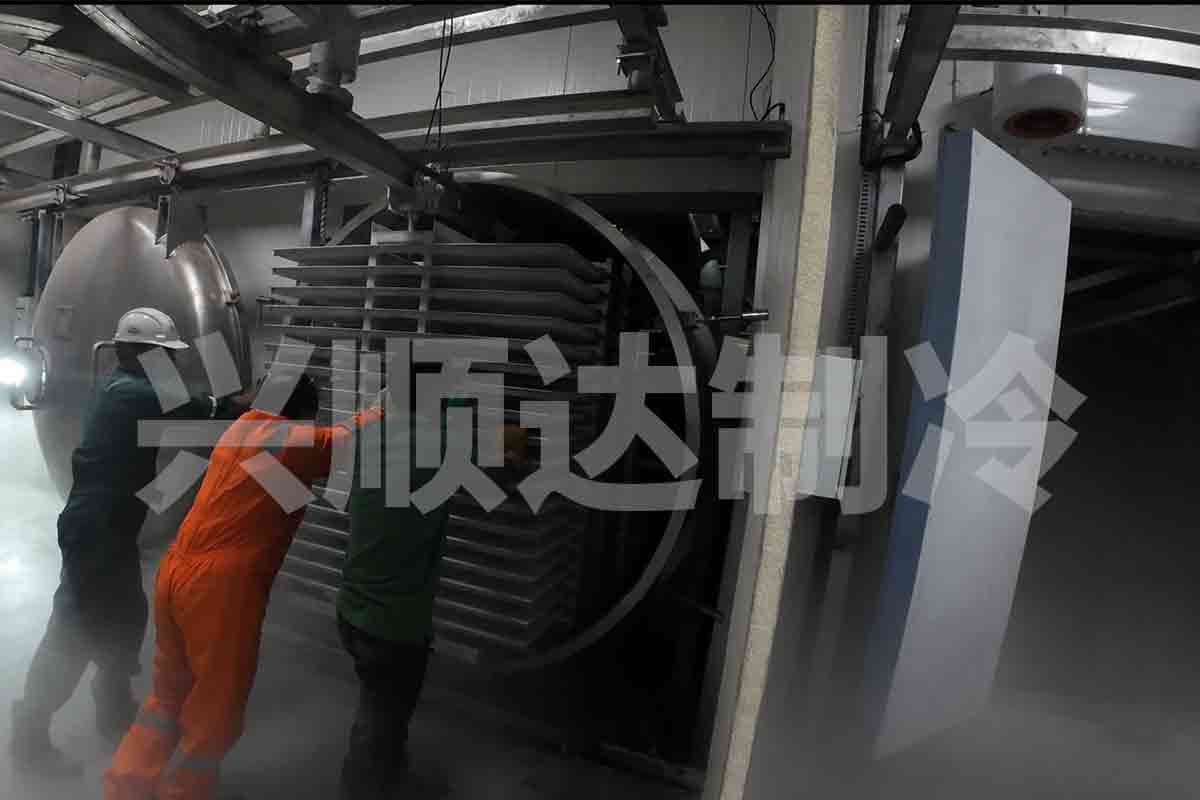
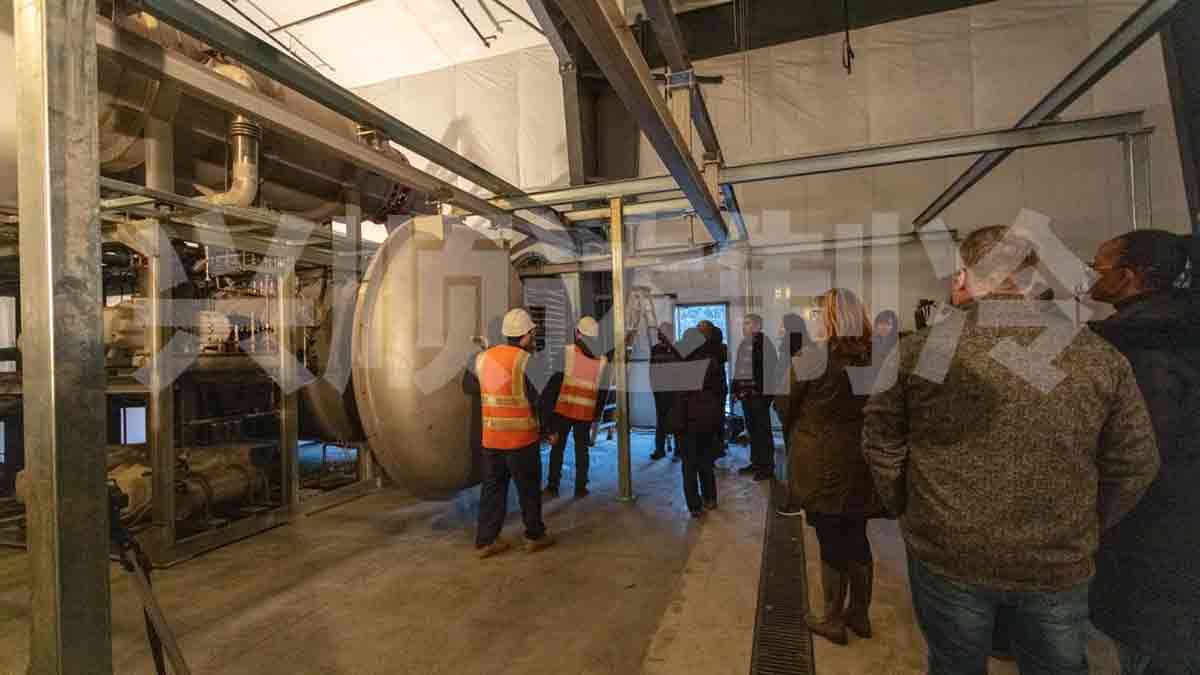
Installation experience matters for commercial and industrial projects. Large vacuum freeze dryers need enough space, lifting access, drainage, power supply, cooling water, and sometimes steam.
A manufacturer with real project experience should be able to show installation site photos and explain how the equipment was installed and commissioned.
Ask for Delivery and Loading Records
Large freeze dryers require proper packing, loading, container planning, and shipping preparation. Buyers should ask how the manufacturer protects the equipment during delivery.
This is especially important for international projects, where damage during transportation can delay installation.

How to Compare Vacuum Freeze Dryer Manufacturers
The best comparison method is not “which machine is cheaper.” Instead, buyers should compare real production support.
Check Food Production Experience
A manufacturer with food freeze-drying experience can discuss drying time, loading density, slice thickness, vacuum range, final moisture, texture, and energy use based on similar products.
For example, fruit, seafood, cooked meals, meat, herbs, and liquid products behave differently during freeze drying. Therefore, the manufacturer should not use the same answer for every product.
Buyers can review real project examples in the freeze dryer case studies.
Compare System Configuration, Not Only Tray Area
Tray area is only one parameter. Buyers should also compare condenser capacity, refrigeration system, vacuum pump configuration, vacuum gauge accuracy, heating uniformity, chamber material, HMI data recording, and after-sales service.
Two machines with the same tray area can produce very different drying results if one has a smaller condenser, weaker refrigeration system, or inaccurate vacuum measurement.
Compare Total Project Support, Not Only Machine Price
A vacuum freeze dryer is a production system. The final cost includes equipment price, energy use, drying time, labor, maintenance, spare parts, downtime, and training.
A cheaper machine may cost more later if it creates longer cycles, unstable vacuum, frequent failures, or poor product quality. For more cost evaluation details, buyers can read this freeze drying cost analysis.
Why the Cheapest Vacuum Freeze Dryer Manufacturer May Cost More Later
Low price can look attractive during the quotation stage. However, food factories should understand what may be hidden behind the lower price.
| Low-Cost Shortcut | Possible Result |
|---|---|
| Smaller condenser area | Slower vapor capture and longer drying time. |
| Inaccurate vacuum gauge | Misleading pressure data during sublimation. |
| Undersized refrigeration system | Unstable cold trap performance. |
| Thin chamber material | Higher maintenance risk. |
| Limited operator training | More trial-and-error during production. |
| Manual only, no process support | Harder recipe development. |
| Weak spare parts support | Longer downtime after failure. |
Key point: Buyers should not assume that two vacuum freeze dryers with the same tray area will perform the same in real production.
What Support Should a Vacuum Freeze Dryer Manufacturer Provide?
For food production, manuals and videos are useful. However, they cannot replace real process training. A responsible manufacturer should help the customer understand the product, build the drying process, and operate the machine correctly.
- Product information confirmation.
- Sample testing.
- Model recommendation.
- Factory layout suggestion.
- Equipment manufacturing.
- Factory testing before delivery.
- Delivery.
- Installation guidance.
- Operator training.
- Process follow-up.
- Spare parts and after-sales support.
This support is especially important for medium and large food projects. Operators need to understand how much product to load, how thick to cut it, how to judge the drying stage, and how to adjust the recipe after real production begins.
What a Responsible Vacuum Freeze Dryer Manufacturer Should Not Promise
A trustworthy manufacturer should explain limits clearly. Unrealistic promises may create problems after installation.
It Should Not Promise Every Product Can Finish in 8 Hours
Different foods have different moisture content, sugar levels, fat content, structure, thickness, and loading density. Therefore, drying time must come from product testing and real production data.
Some products may finish quickly. Others need longer drying cycles. A reliable manufacturer should explain this before the buyer chooses a model.
It Should Not Recommend a Model Only by Tray Area
Tray area does not equal production capacity. Buyers should also check wet material loading, water removal load, condenser capacity, drying time, and batch schedule.
It Should Not Size the Machine Only by Finished Product Weight
Finished product weight depends on moisture removal. For this reason, equipment sizing should start with wet material capacity, not only finished product output.
It Should Not Push a Large Machine Without Product Testing
For a new product, new recipe, or new market, sample testing can reduce risk. A reliable manufacturer should sometimes say that product testing is needed before a final model recommendation.
What Information Should Buyers Send Before Requesting a Quote?
To receive a more accurate proposal, buyers should prepare the following information:
- Product type.
- Fresh material moisture.
- Slice thickness or product size.
- Target final moisture.
- Expected finished texture.
- Wet material per batch.
- Wet material per day.
- Number of working hours per day.
- Local power supply.
- Steam availability, if any.
- Cooling water condition.
- Factory space and ceiling height.
- Installation country.
- Packaging plan.
- Whether sample testing is needed.
With this information, the manufacturer can evaluate drying area, condenser load, refrigeration configuration, vacuum system, energy use, and installation conditions more accurately.
FAQ About Vacuum Freeze Dryer Manufacturers
What does a vacuum freeze dryer manufacturer do?
A vacuum freeze dryer manufacturer designs and builds freeze-drying systems that remove moisture through freezing, vacuum, sublimation, condensation, and controlled heating. For food production, the manufacturer should also support product testing, model selection, installation, training, and after-sales service.
How should buyers compare vacuum freeze dryer manufacturers?
Buyers should compare food production experience, real manufacturing evidence, condenser capacity, vacuum stability, vacuum gauge accuracy, refrigeration design, HMI data recording, installation support, and operator training.
Is a vacuum freeze dryer the same as a lyophilizer?
The basic principle is similar. Both use freezing, vacuum, and sublimation to remove moisture. Food producers often use the term freeze dryer, while pharmaceutical and laboratory users often use the term lyophilizer.
What size vacuum freeze dryer does a food factory need?
The size depends on wet material weight, moisture content, slice thickness, loading density, drying time, condenser load, and daily production target. Buyers should not choose a machine only by tray number or finished product weight.
Why do vacuum freeze dryer prices vary so much?
Prices vary because manufacturers use different chamber materials, condenser sizes, refrigeration systems, vacuum pumps, vacuum gauges, control systems, defrost methods, installation designs, and service levels.
Should a buyer choose the lowest-priced vacuum freeze dryer manufacturer?
Not always. A lower initial price may hide a smaller condenser, weaker refrigeration system, inaccurate vacuum gauge, thinner material, limited training, or poor spare parts support. Buyers should compare long-term production cost, not only purchase price.
Request a Vacuum Freeze Dryer Project Proposal
Food producers should choose vacuum freeze dryer manufacturers based on real manufacturing ability, food production experience, technical configuration, process support, and long-term service.
The engineering team behind goodfreezedryer.com can help buyers evaluate product type, wet material capacity, drying time, condenser load, vacuum monitoring, refrigeration design, factory layout, installation, and operator training.
To start a project evaluation, send product details, target capacity, factory conditions, and sample testing requirements through the contact page.