
Freeze-Dried Meat Case Study
This freeze-dried meat case study shows how a Mongolian food processor used an SDG350 10㎡ freeze dryer to process approximately 121 kg of 10 mm meat chunks per batch and complete drying in 12 hours.
Quick Facts
This meat project used real production data instead of general marketing claims. The data helps food manufacturers evaluate batch capacity, product thickness, drying time, vacuum range, cold trap capacity, final moisture, and energy cost.
| Location | Mongolia |
|---|---|
| Year | 2024 |
| Product | Freeze-dried meat |
| Product Type | Meat chunks |
| Selected Thickness | Approx. 10 mm after testing |
| Equipment | SDG350 freeze dryer |
| Drying Area | 10㎡ |
| Loading Density | 12.1 kg/㎡ |
| Batch Loading | Approx. 121 kg/batch |
| Time to Dry | 12 hours |
| Final Moisture Content | 1.49% |
| Vacuum Range | 26–103 Pa |
| Condenser Capacity | 2 kg water/㎡/hour |
| Total Condenser Capacity | Approx. 20 kg water/hour |
| Energy Consumption | 1.77 kWh/kg fresh material |
| Estimated Batch Electricity Use | Approx. 214.17 kWh |
Commercial Freeze-Dried Meat Production
In 2024, a food processing customer in Mongolia used an SDG350 10㎡ commercial freeze dryer to produce freeze-dried meat chunks for commercial food processing.
Meat chunks require careful drying control because product thickness, fat content, protein structure, final moisture, and rehydration quality can all affect the final product.
For this project, meat chunks were loaded at 12.1 kg per square meter. With a total drying area of 10㎡, the batch loading capacity reached approximately 121 kg per batch.
After comparing different meat chunk thicknesses, 10 mm was selected as the more suitable process for the customer’s production requirements.
This calculation helps buyers understand real production capacity. Drying area alone is not enough; loading density, product thickness, and drying time must be evaluated together.




The Challenge: Balancing Meat Thickness, Drying Time, and Equipment Utilization
Meat chunks are more difficult to dry than many sliced fruits or vegetables. Product thickness, fat content, protein structure, and tray loading can affect drying time and final moisture distribution.
Product Thickness
Very thin meat pieces can dry faster, but they may reduce batch loading and equipment utilization.
Equipment Utilization
The process needed to balance drying speed with effective use of the 10㎡ drying area.
Low Final Moisture
The final moisture content reached 1.49%, supporting storage stability and packaging.
Vacuum Stability
The drying process operated within a 26–103 Pa vacuum range.
Cold Trap Capacity
The condenser capacity was designed at 2 kg water/㎡/hour.
Energy Control
The energy consumption was approximately 1.77 kWh per kg of fresh material.
Meat Chunk Thickness Test: Why 10 mm Was Selected
For freeze-dried meat production, product thickness directly affects drying time, batch loading, product quality, and equipment utilization.
In theory, thinner meat pieces are more favorable for the freeze-drying process. Moisture can escape more easily, and the drying time can be shortened.
However, if the material is too thin, the loading capacity per batch may decrease. This can lower the effective utilization rate of the freeze dryer and increase the production cost per batch.
Therefore, in real production, the process should not only focus on drying speed. It should also consider batch loading, equipment utilization, product quality, and the customer’s actual production requirements.
For this Mongolia freeze-dried meat project, different meat chunk thicknesses were tested, including 4 mm, 6 mm, 10 mm, 11 mm, and 12 mm. After comparing drying performance, loading efficiency, and production practicality, 10 mm was selected as the more suitable thickness for the customer’s production needs.
SDG350 10㎡ Freeze Dryer
The SDG350 freeze dryer was selected to support commercial meat processing with stable vacuum control, reliable cold trap capacity, and practical batch output.
- 10㎡ drying area for commercial meat freeze-drying
- 10 mm meat chunks selected after thickness testing
- 12.1 kg/㎡ loading density and approx. 121 kg per batch
- 26–103 Pa vacuum range during drying
- 2 kg water/㎡/hour condenser capture capacity
- 12-hour drying cycle with 1.49% final moisture
Real Drying Data for Freeze-Dried Meat
This section gives buyers practical reference data. It shows how product thickness, loading density, vacuum control, cold trap capacity, final moisture, and energy use affect actual production performance.
In this project, the SDG350 processed about 121 kg of 10 mm meat chunks per batch. The drying cycle was completed in 12 hours, and the final moisture content reached 1.49%.
| Product | Meat chunks |
|---|---|
| Selected Thickness | Approx. 10 mm |
| Fresh Material Loading | 12.1 kg/㎡ |
| Total Batch Load | Approx. 121 kg/batch |
| Vacuum Range | 26–103 Pa |
| Condenser Capacity | 2 kg water/㎡/hour |
| Total Condenser Capacity | Approx. 20 kg water/hour |
| Final Moisture | 1.49% |
| Energy Consumption | 1.77 kWh/kg fresh material |
| Drying Time | 12 hours |
Production Result: 12-Hour Drying Cycle
The SDG350 10㎡ freeze dryer completed the 10 mm meat chunk drying process in approximately 12 hours. The final moisture content reached 1.49%.
Why These Data Points Matter
For meat processors, real production data is more useful than general machine descriptions. These parameters help estimate output, freeze dryer cost, and equipment suitability.
1. Thickness Selection
The customer tested 4 mm, 6 mm, 10 mm, 11 mm, and 12 mm meat chunks. The 10 mm process offered a better balance between drying performance, loading efficiency, and practical production output.
2. Cold Trap Capacity
The condenser capacity was 2 kg water/㎡/hour. Based on a 10㎡ drying area, the maximum condenser capture capacity reached approximately 20 kg water/hour during high-load drying stages.
3. Energy Consumption
The energy consumption was approximately 1.77 kWh per kg of fresh material. Based on 121 kg per batch, the estimated electricity use was about 214.17 kWh per batch.
Project Images
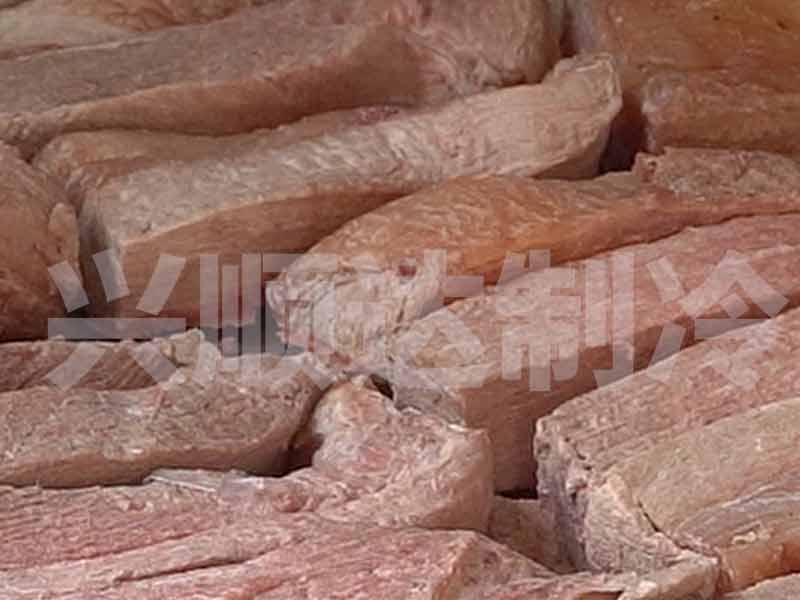
These project images show the SDG350 freeze dryer system, chamber tray structure, control panel, and finished freeze-dried meat chunks.

What Meat Processors Can Learn from This Case
This Mongolia freeze-dried meat project shows that meat freeze-drying equipment should be evaluated by real drying performance, product thickness testing, and energy cost.
Product Thickness Must Be Tested
For freeze-dried meat, thinner pieces can improve drying speed, but they may reduce batch loading and equipment utilization.
Ask for Real Drying Data
Batch load, product thickness, drying time, final moisture, vacuum range, condenser capacity, and energy use provide more value than general supplier claims.
Check Energy Consumption
Energy use affects the real production cost. In this case, the energy consumption was 1.77 kWh per kg of fresh meat chunks.
Match Machine Size to Production Stage
A 10㎡ freeze dryer can be a practical choice for commercial meat, ready meal, and high-protein food production.
Continue Reading
These internal links guide visitors from the case study to product selection, cost analysis, larger equipment comparison, and manufacturer evaluation.
Planning to Produce Freeze-Dried Meat?
Please describe your requirements in as much detail as possible. Our team can help you estimate the right freeze dryer configuration and provide the following materials: