
Freeze Dryer Machine South Africa Buyer Guide
Freeze Dryer Machine South Africa: 2026 Price & Buying Guide
Freeze dryer machine South Africa searches mix R100,000 home units, small laboratory systems and multi-tonne food-production plants. They are not equivalent. This guide compares public South African listings with pilot, commercial and industrial systems using prepared wet load, water removal, full batch time, utilities, landed cost and written service scope.
Market and technical review updated: 6 July 2026
Get a Capacity, Utility and Budget Check
This project review is intended for food businesses requiring approximately 60 kg to 8 tonnes of prepared wet-material capacity per 24 hours.
A buyer should provide the food type, prepared wet kilograms per day, product dimensions, initial moisture, final-moisture target, South African city, available voltage and cooling-water conditions.
The engineering response includes: a preliminary model range, the capacity assumptions behind it, a utility checklist, suggested test scope and an itemised quotation boundary.
Quick Answer: Which Freeze Dryer Fits the Project?
Home or micro-business
Choose a compact unit when batches stay in single-digit kilograms and manual loading, defrosting and pump maintenance fit the business. Confirm stock, warranty responsibility and local repair options.
Pilot or growing food business
Selection should be based on prepared wet kilograms per batch, usable shelf area, water removed and full turnaround. The buyer should ask whether the quoted output comes from a comparable product or only a generic load assumption.
Factory production
For hundreds of kilograms or tonnes per day, treat the purchase as a plant project. Include refrigeration, vacuum, condenser duty, electrical capacity, cooling, installation, FAT/SAT, training and critical spares.
Tray count should not be compared alone. Two nine-tray machines can have different tray area, layer depth, water load, condenser capacity and cycle time. Compare the same product and the same endpoint.
What Buyers Currently Find in South Africa
Current ranking pages are mainly local product listings for home, small-commercial and laboratory equipment. That is useful for price discovery, but it leaves a gap for food factories that need hundreds of kilograms or several tonnes of wet-material capacity per day.
Food processors planning to buy a freeze dryer in South Africa should compare the complete production duty rather than equipment price alone. A factory buyer evaluating a freeze dryer for sale in South Africa should also verify whether cooling equipment, commissioning, training and critical spares are included.
| Public listing checked 6 July 2026 | Published price / availability | Published capacity basis | What the buyer should verify |
|---|---|---|---|
| Naturalwise HRC100 Pro Commercial | R395,000; published lead time 2–4 months | 29.5–45.4 kg per batch; 2.7 m²; 220 V single phase, dedicated 30 A circuit | Product used for the capacity range, complete cycle, local repair scope and stock status |
| Keep It Medium Home Pro | R100,000; listed as sold out / pre-order; 6–10 week notice | Up to 7 kg per batch; 0.4355 m²; 220 V, dedicated 20 A circuit recommended | Available production hours, warranty logistics, oil service and whether output meets the business plan |
| Apex Scientific LyoEase 50 | Enquiry price; local branches listed | 6–8 kg per batch; 0.56 m²; 7 kg ice capacity; 220 V / 50 Hz option | Food-production suitability, cycle evidence, throughput per day and included commissioning |
These are snapshots of the sellers’ own pages, not independent performance tests. Price, stock and specifications can change. Confirm them in a signed offer.
The decision boundary is scale. A compact South African listing can be the right choice for trials or a small business. It is not a benchmark for a factory system with a separate cooling plant, high-capacity condenser, multiple vacuum pumps, formal acceptance testing and site commissioning.
Freeze Dryer Machine South Africa Price and Landed Cost
The following bands are the manufacturer’s July 2026 factory-budget references. They are not an average of all freeze dryers sold in South Africa. The scope starts with 60–120 kg/day pilot systems and extends to multi-tonne food plants.
| Production class | Typical wet-food basis | Factory budget | Approximate ZAR reference |
|---|---|---|---|
| Lab / pilot | 60–120 kg per 24 h | CNY 280,000–310,000 USD 41,000–46,000 |
R670,000–R742,000 |
| Commercial | 340 kg–1.36 t per 24 h | CNY 540,000–1,390,000 USD 80,000–205,000 |
R1.29–R3.33 million |
| Industrial | 1.2–8 t per 24 h | CNY 1,690,000–3,900,000 USD 249,000–574,000 |
R4.04–R9.33 million |
Capacity basis: all 24-hour figures refer to prepared wet-material capacity under typical food-production conditions, using approximately 15% solids as the planning basis. Actual output depends on product moisture, thickness, loading density, drying profile, defrost time and final-moisture target.
Quotation boundary: these are preliminary factory-equipment budget ranges, not fixed landed quotations. The final offer must state the Incoterm and identify whether cooling equipment, export packing, spare parts, installation, commissioning, travel and first-batch support are included.
Planning conversion: CNY 1 ≈ ZAR 2.3925 and USD 0.147, checked for early July 2026 against a public CNY/ZAR rate history. Exchange rates, materials, configuration and commercial terms change the final value.
Build a landed project budget
For imports from China, the South African Revenue Service explains that import VAT is calculated on the added tax value: customs value, plus a 10% uplift where applicable, plus non-rebated duty. VAT is then applied at 15%. The tariff classification determines the duty, so confirm the HS code and current treatment with a customs broker. Use the official SARS import-VAT explanation and SARS tariff book.
Buyers should require every supplier to mark the following as included, excluded or buyer-supplied: cooling tower, water treatment, electrical distribution, steam connection, drainage, foundations, unloading, rigging, installation travel, commissioning, training, test product, spare parts and local contractor work.
For operating-cost formulas, use the separate freeze-drying cost analysis. This South Africa page should own the local purchase and landed-cost decision, while the cost page owns electricity, steam, labour and cost-per-kilogram calculations.
Compare Capacity by Wet Product and Water Removed
Prepared wet load means the material that enters the freeze dryer after washing, trimming, cooking, slicing or concentration. It is different from raw purchasing weight and final dry-product weight.
Use one comparison basis
- State the exact food or formulation.
- State prepared wet kilograms per batch and per 24 hours.
- Record initial moisture or solids and the required final endpoint.
- Define slice thickness, cube size or liquid depth.
- Include loading, pull-down, drying, unloading, defrost, cleaning and changeover.
- Compare condenser ice load and utility demand for the same cycle.
Freeze drying is a coupled heat- and mass-transfer process. As the dry layer grows, resistance to vapour flow increases. Equipment geometry, tray contact and radiant heat also change product temperature during scale-up. Therefore, tray area alone cannot guarantee the same cycle or output on a larger machine.[1]
More heat can shorten primary drying, but too much heat can push the product above its safe temperature and cause melting, shrinkage or collapse. Too little heat extends the cycle. The safe balance depends on composition, structure, layer depth, pressure and the product’s critical temperature.[2]
Buyer implication: request a representative product test or a genuinely comparable batch record. It should show product preparation, wet load, dimensions, shelf area, pressure and temperature traces, complete cycle, final-moisture method and rehydration or sensory result.
Production Classes, Power and South African Utilities
The table below summarises the manufacturer’s model groups. It is a preliminary planning tool, not a performance guarantee. Final capacity depends on the product and agreed test basis.
| Model group | Manufacturer wet-load reference | Connected-power range | Typical project stage |
|---|---|---|---|
| SDG60 / SDG90 | 60–120 kg per 24 h | 11–15.8 kW | Recipe development, product launch and pilot production |
| SDG350 / SDG700 / SDG1100 | 340 kg–1.36 t per 24 h | 58.16–155.9 kW | Commercial food production |
| SDG1600 / SDG3000 / SDG6000 | 1.2–8 t per 24 h | 148–510.2 kW; steam-heating options | Industrial and multi-shift plants |
Projects above the commercial range can review the industrial freeze dryer models for 1.2–8 tonnes of prepared wet material per 24 hours.
Connected power is not average energy consumption. It is used to size the electrical supply. Ask for measured kWh per batch or per kilogram, the product and load behind the result, the complete cycle boundary and any steam consumption.
Food freeze-drying research confirms that time and energy depend on product characteristics, equipment design and process variables. Final moisture is also product-specific; both excessive residual moisture and unnecessary over-drying can create quality or cost problems.[3]
Electrical and cooling checks
South Africa’s low-voltage distribution commonly provides 400/230 V, and Eskom states that the national power-system frequency is 50 Hz. A buyer should not order from a country label alone. The project team should record the measured site voltage, phase arrangement, available kVA, breaker capacity, cable route, motor-starting behaviour, voltage stability and generator plan.
Commercial and industrial systems also need a defined heat-rejection basis. The quotation should state cooling-water inlet temperature, flow, pressure, water quality and ambient design condition. Add drainage for defrost and cleaning, ventilation, maintenance access, floor loading and the delivery route.
Use the commercial freeze dryer setup guide for a fuller site checklist.
Technical Checks Before Purchase
Confirm that it is a real freeze dryer
A hot-air dehydrator uses heated airflow to evaporate liquid water. A vacuum freeze dryer freezes the product and removes ice mainly by sublimation. It needs a sealed chamber, refrigeration, a vapour condenser or cold trap, a vacuum system and controlled heat input.[2]
| Check | Evidence to request | Weak comparison |
|---|---|---|
| Capacity | Wet load, water removed, thickness, shelf area and full cycle | Tray count or “kg per batch” without product conditions |
| Condenser | Total ice load, capture rate, temperature under vapour load and defrost time | Lowest empty cold-trap temperature only |
| Vacuum | Pump arrangement, gauge type, leak test and timed pull-down conditions | Pump nameplate or ultimate vacuum alone |
| Heating | Control zones, product probes and temperature-uniformity evidence | High heater power presented as proof of a fast cycle |
| Controls | Recipes, trends, alarms, user access, batch records and data export | A timer with no auditable process history |
| Service | Named responsibilities, remote access, local contractors, training and spares | “Local support” without a location, person or response process |
The freeze dryer specifications guide explains each item. For acceptance criteria, see food freeze dryer FAT, SAT and product validation.
Food Safety and South African Hygiene Requirements
Freeze drying is not a universal kill step. In one controlled study, high numbers of viable Enterococcus faecium remained after freeze drying, and protected cells stayed stable during frozen storage. The study used one surrogate organism and a laboratory protocol, so it does not predict pathogen reduction in a buyer’s food product. It does show why a food business must not treat dehydration as sterilisation.[4]
The processor’s food-safety plan should separately address raw-material hazards, washing and pretreatment, any validated lethality step, hygienic unloading, environmental control, packaging, metal detection where applicable, lot traceability and finished-product testing.
South Africa’s Department of Health lists Regulation R638 for general hygiene requirements for food premises, food transport and related matters. Review the official R638 regulation with the relevant municipal and food-safety advisers.
Equipment implication: ask about food-contact materials, weld access, drainage, tray and trolley cleaning, separation of raw and post-drying areas, and moisture control during unloading and packaging.
How to Use Project Evidence Without Treating It as a Guarantee
The following figures are company-published project records. They are not South African installations or independent audits. Use them to formulate questions, then request the underlying batch basis and a product-specific acceptance test.
| Published project | Recorded basis | What it can support |
|---|---|---|
| SDG350 meat pieces, Mongolia | 10 m²; 121 kg; 10 mm pieces; 12 h; 1.49% final moisture | A comparable-trial discussion for controlled meat-piece size and load |
| SDG700 pineapple, Indonesia | 20 m²; 244 kg; 12 h; 2.31% final moisture; about 1.73 kWh/kg wet load | A question set for sliced fruit, measured electricity and endpoint |
| SDG6000 shrimp, India | 200 m²; 2,320 kg; 8 h; 1.68% final moisture | Large-load coordination, freezing, unloading and packaging planning |
South Africa Supplier Comparison Checklist
- Same duty: compare the same food, wet load, dimensions, initial moisture, final endpoint and daily schedule.
- Same supply boundary: identify refrigeration, vacuum pumps, cooling equipment, controls, trays, spares and export packing.
- Same landed-cost boundary: separate factory price, freight, customs, VAT, inland transport, utilities and installation.
- Evidence: request a representative batch record, not a cycle claim without product conditions.
- Acceptance: define FAT, SAT, leakage, pull-down, temperature behaviour, alarms, data export and product results.
- Support: name the manufacturer engineer, South African contractors, remote-access method, training scope and spare-parts path.
- Contract: put inclusions, exclusions, travel, warranty logistics and response process in writing.
Information Needed for an Accurate South Africa Quote
Product
- Food and formulation
- Raw, cooked or concentrated condition
- Photos and dimensions
- Initial moisture or solids
- Target final moisture and rehydration
Production
- Prepared wet kg per batch and day
- Shifts and operating days
- Product-change schedule
- Packaging format
- Project start date
South African site
- City and delivery location
- Voltage, phase, frequency and kVA
- Cooling-water conditions
- Steam, air and drainage
- Room, floor and delivery route
Request a Project-Based Recommendation
Provide the information above. The engineering team will return a model range, stated capacity assumptions, preliminary utility list, recommended test scope and itemised quotation boundary.
Frequently Asked Questions
How much does a freeze dryer cost in South Africa?
Public small-unit listings checked in July 2026 included about R100,000 for a home unit and R395,000 for a mid-size commercial listing. The manufacturer’s production-system budget starts at about R670,000–R742,000 for 60–120 kg/day pilot equipment. Freight, import charges, VAT, utilities, installation and commissioning can increase the landed project cost.
Can a freeze dryer use South Africa’s 400 V, 50 Hz supply?
Industrial equipment can be configured for a 400 V three-phase, 50 Hz project. The supplier must still verify the measured site voltage, available kVA, breaker and cable sizing, compressor starting conditions and voltage stability before manufacture.
Should a startup buy a home or commercial freeze dryer?
A home unit can suit recipe trials and single-digit-kilogram batches. Move to pilot or commercial equipment when the business needs documented daily output, larger condenser duty, repeatable batch records, defined utilities and formal process support.
Is a used freeze dryer a good option?
It can be, but inspect compressor condition, refrigerant availability, vacuum pumps, seals, sensors, controls, data export, electrical compatibility and spare-parts support. A low purchase price can be offset by refrigeration repairs, pump overhaul or missing documentation.
Does freeze drying kill bacteria?
Do not assume that it does. Freeze drying can preserve viable microorganisms under some conditions. Food businesses need product-specific hazard analysis, hygiene controls and any required validated lethality step.
What information should a buyer provide before requesting a quote?
A buyer should provide the food, formulation, dimensions, prepared wet kilograms per day, initial moisture, final endpoint, South African city, electrical supply, cooling conditions, room constraints and required installation date.
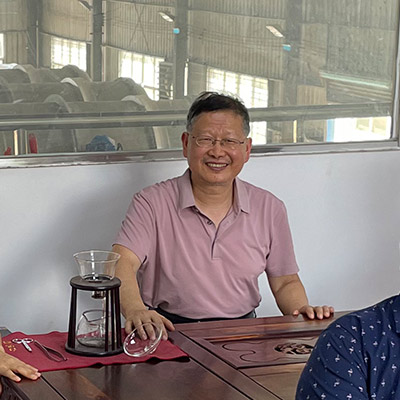
Technical Review by Zheng Wei
Founder & Freeze-Drying System Engineer
Fuzhou Xing Shun Da Refrigeration Facility Project Co., Ltd.
Zheng Wei participates in food product trials, equipment selection, refrigeration and vacuum configuration, installation guidance and process optimisation. Manufacturer prices, model data and project records on this page are identified as company information rather than independent market averages.
References and Source Method
Academic claims are cited close to the relevant text. English references retain their original titles and include the DOI. Market prices and availability were checked on sellers’ public pages on 6 July 2026. They may change.
Academic literature
- Ratti C. Freeze drying for food powder production. In: Handbook of Food Powders: Processes and Properties. Woodhead Publishing; 2013:57–84. Freeze Drying for Food Powder Production — DOI: 10.1533/9780857098672.1.57
- Nowak D, Jakubczyk E. The Freeze-Drying of Foods—The Characteristic of the Process Course and the Effect of Its Parameters on the Physical Properties of Food Materials. Foods. 2020;9(10):1488. The Freeze-Drying of Foods — DOI: 10.3390/foods9101488
- Waghmare RB, Choudhary P, Moses JA, Anandharamakrishnan C, Stapley AGF. Trends in Approaches to Assist Freeze-Drying of Food: A Cohort Study on Innovations. Food Reviews International. 2022;38(sup1):552–573. Trends in Approaches to Assist Freeze-Drying of Food — DOI: 10.1080/87559129.2021.1875232
- Xu J, Liu S, Song J, Tang J, Zhu MJ, Gray P, Villa-Rojas R. Dry-inoculation method for thermal inactivation studies in wheat flour using freeze-dried Enterococcus faecium NRRL B-2354. LWT – Food Science and Technology. 2018;89:10–17. Dry-Inoculation Method for Thermal Inactivation Studies in Wheat Flour — DOI: 10.1016/j.lwt.2017.10.006
South African authoritative sources
- South African Revenue Service. How VAT is calculated on imported goods.
- South African Revenue Service. Customs tariff.
- South African National Department of Health. Food Control regulations, including R638.
- Eskom. 400/230 V low-voltage distribution reference.
- Eskom. South African power-system frequency reference.
Technical limitation: final equipment performance depends on the product, preparation, wet load, layer depth, utilities, acceptance endpoint and agreed project scope. Product testing and project-specific engineering are recommended before purchase.