
Freeze-Dried Blueberries Case Study
How a Czech food processor used an SDG1100 30㎡ freeze dryer to process approximately 360 kg of perforated fresh blueberries per batch and complete drying in 13 hours.
Quick Facts
This blueberry project used real production data instead of general marketing claims. The data helps food manufacturers evaluate batch capacity, pretreatment method, condenser capacity, drying time, vacuum range, and energy cost.
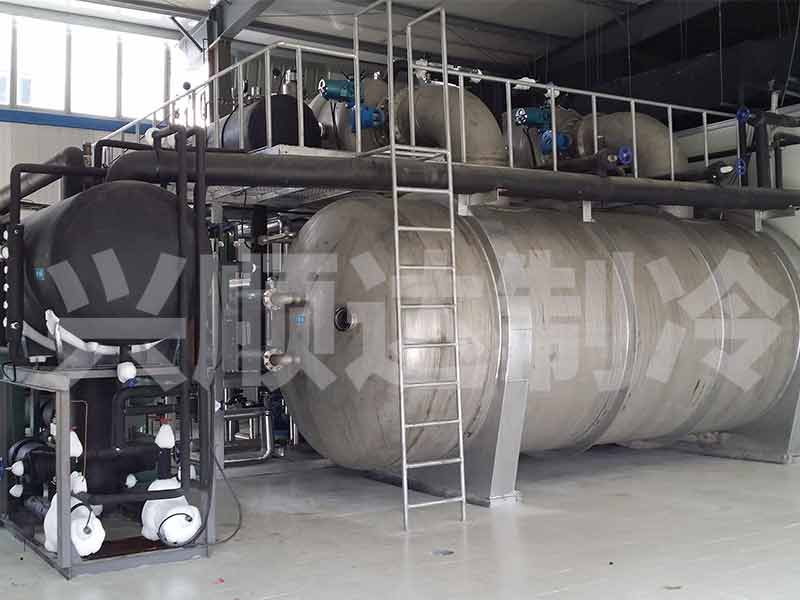
| Location | Czech Republic |
|---|---|
| Year | 2014 |
| Product | Freeze-dried blueberries |
| Equipment | SDG1100 freeze dryer |
| Drying Area | 30㎡ |
| Fresh Blueberry Loading | 12 kg/㎡ |
| Fresh Blueberry Load per Batch | Approx. 360 kg |
| Pretreatment | Perforation pretreatment |
| Time to Dry | 13 hours |
| Final Moisture Content | 1.97% |
| Vacuum Range | 26–90 Pa |
| Condenser Capacity | 2 kg water/㎡/hour |
| Total Condenser Capacity | Approx. 60 kg water/hour |
| Energy Consumption | 1.8 kWh/kg fresh material |
| Estimated Batch Electricity Use | Approx. 648 kWh |
Commercial Freeze-Dried Blueberry Production
In 2014, a food processing customer in the Czech Republic used an SDG1100 30㎡ commercial freeze dryer to produce freeze-dried blueberries for commercial fruit processing.
Blueberries are a high-value fruit product, but they can be more difficult to dry than sliced fruits because the skin can slow moisture release. For this reason, the customer used perforation pretreatment before freeze-drying.
For this project, fresh blueberries were loaded at 12 kg per square meter. With a total drying area of 30㎡, the batch loading capacity reached approximately 360 kg of fresh blueberries per batch.
This calculation helps buyers understand real production capacity. Drying area alone is not enough; loading density, pretreatment method, and drying time must be evaluated together.




The Challenge: Drying Blueberries Efficiently After Pretreatment
Blueberries have a natural skin structure that can limit moisture movement. Perforation pretreatment helped improve moisture release during sublimation.
Skin Barrier
Whole blueberries can release moisture more slowly than sliced fruit because of their skin structure.
Perforation Pretreatment
Perforation helped improve moisture movement and supported a practical drying cycle.
Low Final Moisture
The final moisture content reached 1.97%, supporting commercial product stability.
Vacuum Stability
The drying process operated within a 26–90 Pa vacuum range.
Condenser Capacity
The condenser capacity was designed at 2 kg water/㎡/hour.
Energy Control
The energy consumption was approximately 1.8 kWh per kg of fresh material.
Pretreatment Test: Why Perforation Was Selected
To achieve better freeze-drying results, several blueberry pretreatment methods were compared before finalizing the production process.
Blueberries have a natural skin barrier, which can slow moisture movement during vacuum freeze-drying. To improve drying efficiency and final product quality, different pretreatment methods were tested, including perforation, surface scratching, removing the top and bottom skin, and soaking in a Na2CO3 solution.
After comparison, perforation and surface scratching produced freeze-dried blueberries with a more uniform porous structure. The internal tissue showed no obvious collapse, and the original structure and appearance of the blueberries were better preserved.
These two pretreatment methods also helped maintain the dried blueberry skin color more effectively. Overall product quality was better than blueberries treated by alkaline soaking, top-skin removal, or bottom-skin removal.
After comparing drying efficiency and final product quality, perforation pretreatment was selected as the preferred process for this freeze-dried blueberry project.
SDG1100 30㎡ Freeze Dryer
The SDG1100 freeze dryer was selected to support medium-scale blueberry production, stable vacuum control, predictable batch drying, and practical energy consumption.
- 30㎡ drying area for medium-scale commercial fruit production
- 12 kg/㎡ fresh blueberry loading density
- Perforation pretreatment for better moisture release
- 26–90 Pa vacuum range during drying
- 2 kg water/㎡/hour condenser capture capacity
- 13-hour drying cycle with 1.97% final moisture
Real Drying Data for Blueberry Freeze-Drying
This section gives buyers practical reference data. It shows how loading density, pretreatment, vacuum control, condenser capacity, final moisture, and energy use affect actual production performance.
In this project, the SDG1100 processed about 360 kg of perforated fresh blueberries per batch. The drying cycle was completed in 13 hours, and the final moisture content reached 1.97%.
| Product | Blueberries |
|---|---|
| Pretreatment | Perforation pretreatment |
| Fresh Material Loading | 12 kg/㎡ |
| Total Fresh Blueberry Load | Approx. 360 kg/batch |
| Vacuum Range | 26–90 Pa |
| Condenser Capacity | 2 kg water/㎡/hour |
| Total Condenser Capacity | Approx. 60 kg water/hour |
| Final Moisture | 1.97% |
| Energy Consumption | 1.8 kWh/kg fresh material |
| Drying Time | 13 hours |
Production Result: 13-Hour Drying Cycle
The SDG1100 30㎡ freeze dryer completed the blueberry drying process in approximately 13 hours. The final moisture content reached 1.97%.
Why These Data Points Matter
For commercial freeze dryer buyers, real production data is more useful than general machine descriptions. These parameters help estimate output, freeze dryer cost, and equipment suitability.
1. Loading Density
The customer loaded fresh blueberries at 12 kg/㎡. For a 30㎡ freeze dryer, this means approximately 360 kg of fresh blueberries per batch. This gives buyers a clearer way to estimate production capacity.
2. Condenser Capacity
The condenser capacity was 2 kg water/㎡/hour. Based on a 30㎡ drying area, the maximum condenser capture capacity reached approximately 60 kg water/hour during high-load drying stages.
3. Energy Consumption
The energy consumption was approximately 1.8 kWh per kg of fresh material. Based on 360 kg per batch, the estimated electricity use was about 648 kWh per batch.
What Food Manufacturers Can Learn from This Case
This Czech Republic blueberry project shows that berry freeze-drying equipment should be evaluated by real drying performance, not only by machine size or price.
Pretreatment Matters
Blueberry skin can slow moisture release. Perforation pretreatment can help improve drying efficiency and product quality.
Ask for Real Drying Data
Fresh load, final moisture, vacuum range, condenser capacity, and energy use provide more value than general supplier claims.
Check Energy Consumption
Energy use affects the real production cost. In this case, the energy consumption was 1.8 kWh per kg of fresh material.
Match Machine Size to Production Stage
A 30㎡ freeze dryer can be a practical choice for medium-scale commercial fruit production before scaling to larger systems.
Continue Reading
These internal links guide visitors from the case study to product selection, cold trap design, cost analysis, and inquiry pages.
Planning to Produce Freeze-Dried Blueberries?
Please describe your requirements in as much detail as possible. Our team can help you estimate the right freeze dryer configuration and provide the following materials: