
Freeze dryer Chile · Food project planning
Freeze Dryer Chile: Food Factory Buying Guide
State the specific food product and target output, then verify what the machine, the site, and the equipment supplier must each deliver. This guide shows how to turn that production goal into comparable offers and a clear handover decision.

Select a freeze dryer for a Chilean food plant by checking the target food, required output, and factory operating conditions together. Have prospective suppliers quote against the same job: the exact food, batch load, utility supply, delivery boundary, and acceptance tests. A low purchase price or a catalogue capacity cannot establish factory fit on its own.
Track the core figures separately: wet food loaded per cycle, water captured by the condenser, and saleable finished food produced per day measure different aspects of performance. In addition, assign separate responsible parties for equipment importation, food-establishment authorisation, and electrical applicability checks in Chile.
This guide addresses commercial food production. Laboratory research, pharmaceutical work, and home preservation operate under different requirements and need separate assessments.
01 · Production basis
Set the food and output target before choosing a size
Freeze drying removes water from a frozen product by sublimation: ice changes directly into vapour. That process principle does not establish how much saleable food a particular machine will produce.[4]
Define the finished food and production process in writing before comparing machinery. Research samples, home preservation, and commercial food production operate under completely different constraints. While equipment catalogues help narrow machine classes, representative product evidence is necessary to establish actual production capacity.
- Describe the product: State the exact food, recipe, preparation method, and intended end use. Diced fruit, vegetable ingredients, prepared meals, and dairy products behave differently and cannot serve as interchangeable test materials.
- Separate input from output: Record prepared wet mass per batch and per day, projected finished weight, usable tray shelf area, and total water to remove.
- Account for turnaround time: Factor in freezing, drying, unloading, defrosting, cleaning, and preparation for the next batch. Drying run time alone does not equal full turnaround time.
- Specify food acceptance standards: Set target moisture limits along with the analytical test method, centre dryness, appearance, texture, and rehydration where relevant.
Use the batch freeze dryer capacity guide to establish this shared calculation framework. Provide identical figures to prospective suppliers so proposals solve the same production problem.
When working with a new food or unproven process, consider a targeted trial before investing in industrial equipment. An external trial can address a one-off question, whereas an owned pilot system may suit continuing development. Base this decision on specific technical uncertainties rather than a fixed sales-volume threshold.
Gather representative product evidence, demand assumptions, and all actual site information before signing a production contract. Public pilot and product-development routes illustrate possible approaches to testing methods, but the current availability of services is not confirmed and transfer of a result to larger equipment is not guaranteed.[6][7]
A planning mass balance, not a machine rating
For an initial estimate, let M be prepared wet mass and x and y be initial and final moisture fractions on a wet basis, with 0 ≤ y < x < 1. If dry solids are conserved, finished mass before handling losses or rejects is M × (1 − x) ÷ (1 − y); estimated water removed is M minus that finished mass. These are mass-balance relationships, not measured trial results or guaranteed saleable yield.
Compare that water load with the condenser’s stated usable ice capacity and capture rate over the relevant operating period. Check the proposed load and layer depth against usable tray area. Daily saleable output then requires accepted finished mass per load and a schedule supported by the complete turnaround, downtime and available labour. None of those outputs can be verified from collector mass or shelf area alone.
02 · Local handoff
Separate the Chile responsibilities before shipment
Importing equipment and obtaining permission to operate a food establishment are separate tasks. ChileAtiende lists sanitary authorisation for installations that produce, process, preserve, pack, store or distribute food. Its supporting documents include a plant plan, a process description, food and raw-material lists, and information on water, drainage, heat removal and sanitary controls.[1]
| Workstream | Party to identify | Evidence to obtain |
|---|---|---|
| Equipment import and delivery | Importer, customs representative and freight provider | Exact equipment description, shipping documents, classification review, shipment boundary and delivery destination. |
| Food establishment | Plant operator and the relevant SEREMI de Salud | Applicable authorisation and the premises, process and sanitary information required for the intended activity. |
| Electrical applicability and connection | Local electrical professional, importer and supplier | Review of the exact equipment and components against applicable SEC requirements, plus the factory connection and protection plan. |
| Machine and process handover | Buyer and equipment supplier | Named responsibilities for installation, testing, training, records, spare parts and acceptance. |
On a narrow screen, scroll the table horizontally to read every column.
SEC explains certification for products within its regulated scope and provides a search for products subject to mandatory certification. This does not establish that every industrial freeze dryer has the same certification route. The exact configuration needs an applicability check.[2] Chilean Customs publishes the import procedures and supporting-document requirements; the importer should resolve the route and classification for the actual shipment.[3]
No equipment quotation should be treated as a food-establishment authorisation or a project-specific ruling from SEC or Customs.
03 · Product evidence
Build a product trial that can support a capacity decision
A successful small sample is a useful starting point. It is not a factory production guarantee. Ratti’s engineering chapter explains how differences in equipment geometry and heat transfer can change product temperature during scale-up.[4] The production proposal should therefore preserve the conditions behind the trial result.
| Record | What should be stated | Purchase decision supported |
|---|---|---|
| Food and preparation | Formulation, initial moisture or solids, pretreatment, piece dimensions or fill depth. | Whether the test represents the intended production material. |
| Loading and water load | Prepared wet mass, usable area, loading density and estimated or measured water removed. | Whether shelves, vapour capture and refrigeration are being evaluated on the same basis. |
| Process record | Product and shelf temperatures, absolute chamber pressure, drying stages and full turnaround. | Whether the result can support a realistic production schedule. |
| Release and useful yield | Sampling positions, moisture method, centre dryness, quality limits and acceptable finished mass. | Whether the output meets the product specification across the batch. |
Research on food freeze-drying monitoring also shows why endpoint interpretation depends on the product, loading and cycle conditions.[5] A fixed number of hours should not replace endpoint evidence. Neither paper supplies a universal food recipe or a guaranteed rating for a new machine.
04 · Factory fit
Check the actual factory before fixing the configuration
Have the plant team measure the facility and share data with the supplier before locking the equipment configuration. Consult the commercial freeze dryer setup guide for layout considerations, and resolve these site questions for the Chilean facility:
- Can the local electrical supply support the freeze dryer? Record operating voltage, frequency, phases, service capacity, and circuit protection. Agree on operating responses for electrical interruptions and broader interrupted-batch situations. Rated electrical power alone sizes neither the factory connection nor backup supply.
- Can the plant deliver required cooling and heating utilities? Record actual design ambient and water conditions. Confirm requirements for the selected cooling arrangement and any heating utility required by the system.
- Can the equipment navigate entry routes and fit maintenance clearances? Verify equipment and shipping dimensions, the lifting plan, unloading paths, rigging routes, floor and service clearances, drainage, and maintenance access.
- Can materials flow efficiently before and after freeze drying? Check preparation capacity, freezing capacity, tray movement, hygienic unloading, and packaging transfer to ensure available handling time matches cycle demands.
- Who manages each installation task? Assign engineering drawings, local connections, utility supplies, and commissioning tasks to named parties.
Base decisions on actual plant measurements rather than generic assumptions. If cooling or access items remain unconfirmed, list them as unresolved exceptions before releasing a deposit.
Review vendor utility requirements against the site measurements on a dated sheet prior to shipment. For each variance, specify who acts, what must be done, and the agreed disposition of unresolved items. Neither a destination label nor a general warranty proves factory readiness.
Establish support arrangements in writing. Identify the actual remote or on-site provider, language, training scope, spare-parts route, and agreed interrupted-batch response. Do not assume local technical presence or regional stock from general sales statements.
05 · Comparable offers
Compare quotations for the same complete job
Request proposals for the same food duty and Chilean destination, then examine the supply scope in detail. A machine-only price and an installed production system cover different project scopes. Neither a local address nor an import offer defines the complete boundary of supply on its own.
Require dated prices, freight terms, currency, and local charges with stated tax treatment. Confirm each cost element below before comparing totals.
| Cost or supply item | Question for the offer |
|---|---|
| Machine and options | Which chamber, shelves, trays, condenser, vacuum system, controls and accessories are included? |
| Delivery and import | Which packing, transport, insurance, customs and inland-delivery responsibilities belong to each party? |
| Factory works | Which electrical, cooling, heating, drainage, building and handling works are excluded? |
| Services and support | What testing, documents, installation assistance, training, spare parts and support are contracted? |
| Operating comparison | Which measured batch energy, complete turnaround, labour and acceptable finished yield support the cost estimate? |
| Acceptance | What must pass, who supplies the material and instruments, and how will unresolved results be handled? |
Mark every supply item as included, excluded, or unresolved, and state who supplies or prices each gap. Note the food duty, delivery destination, quote date, currency, and tax treatment alongside each proposal. A local offer does not imply local installation, and an import price does not imply delivery to the plant.
Examine the operating assumptions and units behind supplier claims. Rated electrical power does not equal measured batch energy; drying stages do not equal full turnaround time; wet product loading mass does not equal accepted saleable output. Clearly distinguish estimates, supplier-reported results, and demonstrated results under identified conditions.
After compiling representative trial metrics, refer to the industrial freeze dryer cost guide to build a broader project comparison. Comparing quotations helps buyers see genuine differences once scope gaps and operating assumptions are spelled out side by side.
06 · Handover proof
Agree what must pass before dispatch and handover
Establish clear pass-fail criteria in the purchase agreement before testing begins. Keep equipment working as specified, process performance on representative food, and separate food release for commercial sale distinct. A dry-looking demonstration, an empty-chamber vacuum result, and delivery arrival each address different questions.
- Before dispatch: Confirm the supplied configuration, conduct agreed factory acceptance testing (FAT), and review engineering drawings, manuals, safety information, and test records.
- At the plant site: Inspect the physical installation, utility connections, protective functions, controls, and records, and perform agreed site acceptance testing (SAT).
- With actual food: Run loaded process batches against the agreed sampling plan and quality endpoint, verifying the repeatability needed for the production decision.
- Before commercial release: Manage release and storage sanitation, the plant food-safety plan, packaging, and shelf-life validation under operator controls. Equipment acceptance does not replace separate food release, safety, packaging, and shelf-life controls.
For each test record, document the supplied configuration, representative food, agreed limits, sampling positions, methods, and results. Name who witnesses evidence and signs the dispatch or handover decision. When deviations occur, note the corrective action, responsible party, retest requirements, and final disposition.
Consult the food freeze dryer validation guide for factory acceptance testing (FAT) and site acceptance testing (SAT) protocols. Confirm actual on-site or remote help, training language, and spare-parts arrangements directly in the agreement. A Chilean destination alone does not prove local staff or warehouse stock are present.
07 · Next decision
Send a brief that helps identify the next step
Assemble available product and factory information before requesting a final model and price. A clear brief lets the buyer and prospective suppliers identify what information is already usable and what still needs trial, measurement, or agreement.
- State the food, formulation, preparation method, and intended use.
- Specify prepared wet material per batch and per day separate from finished target mass.
- Provide initial moisture or solids, piece dimensions or fill depth, quality limits, and existing trial records.
- Describe the Chile location, actual utilities, available layout, and packaging arrangement.
- Identify importer and local contacts, intended supply boundary, and required documents.
- List open acceptance, training, and service questions.
Request a food-project equipment review
The engineering team can discuss product testing, preliminary equipment selection and the information needed for a commercial or industrial freeze-drying proposal. Send the food, wet-load target, trial data and factory conditions so the missing process and supply-scope questions can be identified.
Testing, installation assistance and other services remain subject to the specific project agreement. Local authorisations and import arrangements need their own responsible parties.
Examine commercial food freeze dryers and industrial food freeze dryers to compare platform specifications alongside the project brief. Representative product evidence and factory constraints should guide the equipment selection step.
Frequently asked questions
Can a laboratory freeze dryer serve a food business?
A laboratory unit can support research or small trials where suitable, but suitability for food production depends on the actual food, acceptable yield, full cycle, sanitation, and required output. A laboratory condenser rating is no food-throughput guarantee.
What does a freeze dryer cost in Chile?
Obtain a dated quotation for a defined configuration and supply scope. Separate equipment pricing, transport and import, factory works, services, and acceptance. Headline prices from different equipment classes cannot establish comparable project cost.
Does the machine purchase authorise food production?
No. A machine purchase does not grant sanitary permission. The food business operator should confirm actual premises and activity requirements with the relevant sanitary authority (SEREMI de Salud) for the intended processing operation.
Does every freeze dryer follow the same SEC certification route?
Review the exact unit, components, and applicable regulated scope against SEC requirements. A general supplier certificate or foreign marking does not replace a project-specific applicability check.
Sources and evidence boundaries
- ChileAtiende / Autoridad Sanitaria. Autorización sanitaria de alimentos. Accessed October 30, 2026. Used for the food-establishment workstream and document categories, not a specific application’s approval.
- Superintendencia de Electricidad y Combustibles. Sistemas de Certificación de Productos. Accessed October 30, 2026. Requirements concern regulated product scope; this article does not classify or certify a particular freeze dryer.
- Servicio Nacional de Aduanas. Capítulo 3: Ingreso de Mercancías. Accessed October 30, 2026. Import procedures require shipment-specific review; no tariff code, rate or clearance outcome is assigned here.
- Ratti C. Freeze drying for food powder production. In: Bhandari B, Bansal N, Zhang M, Schuck P, editors. Handbook of Food Powders: Processes and Properties. Woodhead Publishing; 2013:57–84. doi:10.1533/9780857098672.1.57. Used for qualitative equipment and scale-up boundaries, not a universal production specification.
- Pisano R, Barresi AA, Fissore D. Innovation in Monitoring Food Freeze Drying. Drying Technology. 2011;29:1920–1931. doi:10.1080/07373937.2011.596299. Monitoring research on specific tray products; its cycle settings are not recipes for other foods.
- CeTA. Liofilización: tecnología para desarrollar alimentos con mayor valor agregado. August 28, 2026. Accessed November 1, 2026. First-party product-development and testing scope; not a confirmed service booking or a universal process specification.
- GEA. Liofilizadores por lotes RAY. Accessed November 1, 2026. Used for the published distinction between pilot development and industrial equipment; supplier performance claims are not independent proof for another system.
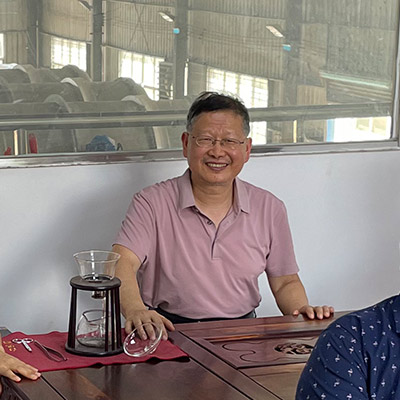
About the Author: Zheng Wei
Founder & Freeze-Drying System Engineer
Fuzhou Xing Shun Da Refrigeration Facility Project Co., Ltd.
Zheng Wei participates in food freeze-drying trials, equipment selection, vacuum-system configuration, refrigeration planning, installation guidance, process optimization, and project handover. The project experience covers fruit, vegetables, cooked foods, seafood, meat, dairy products, herbs, and extracts.