
Food business procurement
Freeze Dryer Ireland: Food Business Buying Guide
Decide what the food business needs to produce before comparing freeze dryer prices in Ireland. A useful offer explains the food duty, the evidence behind its capacity and who will complete the Irish project.

For a food business in the Republic of Ireland, start with the product and the work the machine must do. Establish an uncertain product result through representative trials before fixing a production capacity. Then compare the complete supply and installation scope, while keeping machinery documentation, customs where applicable and food-business readiness as separate tasks.
This guide addresses the Republic of Ireland. Household preservation, aseptic pharmaceutical production and Northern Ireland market arrangements need different guidance.
Start here
What food must the machine produce?
Identify the food, its intended use and the required finished result before selecting equipment. Sizing depends directly on this drying work rather than on nominal equipment categories. Where recipe behaviour or finished-product standards remain uncertain, representative trial work provides the practical way to resolve them before fixing machine choices.
Next, confirm the actual physical drying process and complete machine configuration with the supplier. A product name, tray count or heated-air setting does not prove that an offer is for a genuine freeze dryer.
Freeze drying involves freezing the food, drying under vacuum and removing water vapour. The process depends on heat reaching the food and water vapour moving through its dried layer.[1] A fan or a heated-air function describes different equipment features; it does not by itself demonstrate freeze-drying capability.
The buyer should choose the discussion route that matches the open questions in the project:
- A professional kitchen or small product range: provide the supplier with the actual food, batch quantity, operating schedule, cleaning needs and acceptable result. Compare equipment suited to that workload; a larger factory installation may be unnecessary.
- A product still in development: resolve recipe preparation, freezing behaviour and finished-product criteria through representative trials before committing to a commercial machine size.
- Routine food production: specify prepared wet input, acceptable finished output, full batch turnaround and site utility connections. Discuss with the supplier what test evidence exists for that operational workload.
Use these categories to guide purchasing conversations, not as tested capacity ratings. When the food result is still uncertain, planning a representative trial is the practical next step rather than guessing a larger machine capacity.
Resolve the product
What must a food trial prove before purchase?
The food business and the trial provider should agree on clear criteria for an acceptable product result before running any test. A finished sample can show what was achieved in a specific run, but on its own it does not confirm the loaded recipe, the recorded cycle conditions or whether proposed commercial equipment will reproduce that result at production scale. The buyer should ensure that recorded trial conditions are provided alongside any test sample.
Teagasc’s Prepared Consumer Food Centre (PCFC) offers access to freeze-drying technology. Its equipment information lists blast-freezer preparation and on-site moisture analysis.[6] Access is a starting point for an enquiry, not evidence of a contract-production service or a guaranteed production result.
When a food product is still in development, the business can check directly with the facility whether the equipment setup suits the recipe, preparation method and batch size. Clarify facility suitability, access terms, scheduling availability, fees and what data the trial reporting will provide for the proposed work. Equipment access is only helpful if the planned test directly answers the business’s open purchasing questions.
Keep the food and the process attached to the result
Malik, Gouseti and Bakalis studied concentrated coffee and gum-arabic systems. Formulation and freezing treatment affected dried microstructure and reconstitution, and the two systems did not respond in the same way.[2] These findings do not provide a freezing programme, drying time or finished-product result for every food.
This product dependence directly affects equipment selection. The buyer should always link the recipe and preparation history to test results. When ingredient formulation, piece size, tray loading depth or freezing methods change, check which conclusions still hold and where additional trial work is warranted.
Have the trial team record these five core areas:
- What food was tested: formulation or ingredient, intended use, preparation, piece geometry or fill depth, and initial moisture or solids where measured.
- What was frozen and loaded: freezing history, transfer conditions, prepared wet mass, tray arrangement and sampling positions.
- How the batch was run: equipment configuration, recorded operating conditions, the drying-endpoint decision and what the reported turnaround includes.
- How the result was judged: agreed moisture or water-activity testing where relevant, appearance, texture, reconstitution or ingredient function, with the test methods and sampling identified.
- What remains to be proved in production: differences between the trial equipment and the proposed installation, unresolved assumptions and the remaining acceptance work.
Agree in advance which moisture or water-activity tests apply to the target food and how samples will be taken. This guide sets no universal moisture or water-activity threshold.
Review the test data systematically: determine which agreed targets were achieved, which went unverified and what further testing is required. If the data does not support the planned commercial duty, carry out agreed additional trial or acceptance work before treating any sample as proof.
The food freeze-dryer FAT and SAT guide explains the wider framework for factory and site acceptance testing. A successful small trial does not establish an installed production guarantee; the buyer must still evaluate the proposed commercial installation against the agreed food duty during factory and site acceptance.
Define the output
What does the quoted capacity actually mean?
Ask the supplier what each capacity figure measures before comparing two offers. Prepared wet food loaded, acceptable dried product obtained and water collected as condenser ice are different quantities. A number for one cannot establish the others.
Next, clarify which specific food, preparation method and operating schedule support that figure. Factor in the complete operational cycle between loading one batch and having the chamber ready for the next: loading, drying, product unloading, defrosting and cleaning all form part of full turnaround. A drying time alone does not account for the entire turnaround between batches.
Laboratory and commercial freeze dryers can differ in geometry and heat transfer, changing the conditions experienced by the food.[1] A result from trial equipment therefore does not automatically guarantee output from a larger installation.
Evaluate each quotation by comparing the prepared wet input, acceptable dried-product output and full operating schedule against the supporting trial records. Ask suppliers to highlight key technical assumptions and identify what verification work remains needed to test them. Requesting this evidence clarifies the uncertainty in quoted numbers rather than accepting unverified ratings as settled performance.
The batch-capacity guide outlines the complete turnaround calculation. Apply it directly to the specific food product and intended operating schedule; generic capacity tables cannot settle this project’s production duty.
Once the machine requirements, actual shipment and food-processing operations are clear, assign the specific Irish project tasks. Ensuring machinery compliance, handling customs clearance where goods arrive from outside the EU and registering food premises remain separate responsibilities even when an offer quotes a delivered price.
Prepare the Irish project
Who is responsible for the machine, import and food operation?
Assign a responsible party to each distinct task before signing an agreement. Request equipment documentation from the machine vendor for the exact configuration quoted, arrange import declarations with a customs broker or buyer-appointed party where goods arrive from outside the EU, and review planned operations with the competent food safety authority for the business’s specific activities. Addressing one area does not resolve the others.
| Task | Official starting point | What the buyer should confirm |
|---|---|---|
| Machinery and workplace use | HSA’s machinery alert directs purchasers and importers to check CE marking, a signed EC Declaration of Conformity from the manufacturer or authorised representative, and instructions.[3] | Machine identity, quoted configuration, relevant documents, responsible supplier or importer, intended market date and installation review. |
| Customs, where applicable | Revenue’s guidance for trade outside the EU covers EORI registration, declaration arrangements, commodity classification, customs value and origin.[4] | Who imports and submits declarations, the actual route, classification review, delivery boundary and charges still to confirm. |
| Food-business operation | FSAI states that food businesses must register before operating, including from home. The relevant authority depends on the activities and foods handled.[5] | Food categories, planned activities, premises, the appropriate authority and any registration or approval questions to resolve with it. |
These official sources were rechecked on 7 November 2026. They are starting points, not a conformity assessment of a particular freeze dryer or a complete decision on food-establishment requirements. Confirm the applicable route for the actual supply, food activities and intended market date. Customs clearance, machinery documentation and food-business registration do not substitute for one another.
Do not allow a supplier’s location or shipping term to leave responsibility unassigned. For each task, record the designated party, the required document or decision, and the target date for completion. Use the freeze dryer specification checklist to request technical documentation matched to the quoted build; a general certificate presented during sales discussions does not fulfill this role.
Compare the complete offer
What must be included before the plant can operate?
Shortlisted suppliers should set out equipment, facility preparation, shipping and after-sales support on an identical written basis. This comparison clarifies the full delivered and installed scope instead of just the headline machine price. When an item is excluded from a quotation, identify who supplies it, the cost basis and the expected completion date, because excluded work still has to be carried out on site.
| Part of the project | What the written offer should identify |
|---|---|
| Equipment and auxiliaries | Exact configuration; included refrigeration, vacuum and heating equipment; handling equipment; controls; and buyer-supplied items. |
| Site and utilities | Approved layout and connections, electrical supply, cooling and heat rejection, drainage, access, lifting and service clearances. |
| Shipment and placement | Named delivery term and place, packing, transport, import responsibilities where applicable, unloading and final positioning. |
| Acceptance and handover | Factory and site tests, representative food duty, documents, training, deviations and sign-off responsibilities. |
| Support after delivery | Named provider, remote or on-site work, travel and labour terms, spare parts, warranty exclusions and escalation route. |
A local sales contact, remote technical discussion and agreed site visit are different services. The company’s proposal should state what is offered for the specific project. This guide makes no claim of Irish stock, an Irish branch, locally based engineers or a fixed support response time.
FSAI’s prerequisite-programme guidance includes, where appropriate, equipment fit for purpose and accessible for cleaning, technical maintenance and calibration, services, training and working instructions.[7] These food-operation arrangements need attention alongside the equipment installation.
Obtain machine-specific utility connection data and maintenance requirements for the proposed model, and have the responsible project parties check them against the actual site conditions. Avoid adopting generic utility ratings or servicing assumptions from another machine without confirmation. Ensure cleaning clearances, operator training and operating instructions are agreed as part of handover alongside physical positioning.
For every open quotation item or site requirement, assign a named party to resolve what engineering data, commercial agreement, compliance document or operational decision is still missing, and record its pricing basis and agreed target date. Settling machine pricing and shipping terms does not remove these site and operational requirements.
Consult the installation planning guide for facility layout details and the supplier checklist when evaluating vendor proposals. Use both resources to identify gaps in project scope, rather than assuming a local sales contact handles installation and ongoing technical support.
The next decision
Prepare an Ireland food-project enquiry
Send the food and required format, prepared wet input, desired acceptable output, intended operating schedule, Irish site location and available utilities. Include existing trial records, the planned delivery route, documents needed and the installation or support scope that remains open.
Project brief
Product and intended use:
Prepared wet input and required finished output:
Trial evidence and untested assumptions:
Site, utilities and delivery access:
Machinery, customs and food-business actions:
Installation, training and support requirements:
The engineering team can review the stated food duty and equipment interfaces as the basis for a project-specific discussion. The written proposal should distinguish confirmed supply from items subject to trials, site information or destination-document review.
Ireland freeze-dryer buying questions
Should a food business always buy a larger production machine?
No. Sizing depends on the specific food duty, operating schedule and whether the product result is already proven. A professional kitchen may not need an industrial unit; if drying behaviour or recipe performance is still unconfirmed, representative trial work provides the practical next step before fixing commercial capacity.
Does buying the machine register the food business?
No. FSAI’s guidance applies to the food operation and its activities, including businesses operating from home.[5] Confirm the appropriate registration or approval route with the relevant authority; it is not completed by the equipment purchase.
Can an online price establish the installed cost in Ireland?
No. Compare written quotations that cover the same scope, including shipping, customs arrangements where relevant, unloading and placement, utility connections, factory and site acceptance, and ongoing support. Until exclusions and responsible parties are clearly defined, an equipment-only price cannot determine total installed cost.
References and evidence boundaries
- Ratti C. Freeze drying for food powder production. In: Handbook of Food Powders. Woodhead Publishing; 2013:57–84. DOI: 10.1533/9780857098672.1.57. Food-powder process and scale-up discussion; no universal capacity or operating recipe is inferred.
- Malik N, Gouseti O, Bakalis S. Effect of freezing on microstructure and reconstitution of freeze-dried high solid hydrocolloid-based systems. Food Hydrocolloids. 2018;83:473–484. DOI: 10.1016/j.foodhyd.2018.05.008. Findings are limited to the studied concentrated coffee and gum-arabic systems.
- Health and Safety Authority. Safety Alert – Non-compliant Machinery Products. Official Irish machinery guidance, accessed 30 October 2026.
- Revenue. New to customs. Official customs starting points, accessed 30 October 2026; no tariff code or tax rate is assigned here.
- Food Safety Authority of Ireland. Register Your Food Business. Official registration guidance, accessed 30 October 2026; the authority and route depend on the actual activities.
- Teagasc. Freeze Drying Technology. PCFC equipment-access information, accessed 1 November 2026; suitability, availability, trial terms and reporting must be confirmed with the facility. Its ice-removal specification is not a food-output guarantee.
- Food Safety Authority of Ireland. Prerequisite Programmes. Official food-operation guidance, accessed 1 November 2026; the appropriate arrangements depend on the actual business and activities.
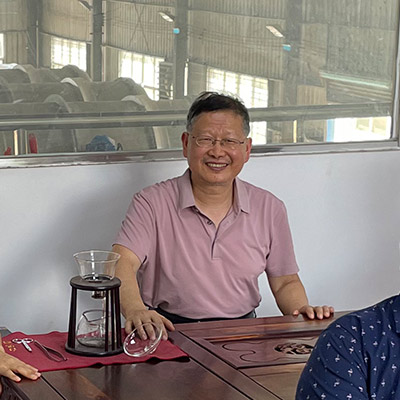
About the Author: Zheng Wei
Founder & Freeze-Drying System Engineer
Fuzhou Xing Shun Da Refrigeration Facility Project Co., Ltd.
Zheng Wei participates in food freeze-drying trials, equipment selection, vacuum-system configuration, refrigeration planning, installation guidance, process optimization, and project handover. The project experience covers fruit, vegetables, cooked foods, seafood, meat, dairy products, herbs, and extracts.