
Food production · Parts procurement
Freeze Dryer Door Gasket: Food Plant Replacement Guide
A freeze dryer door gasket must fit the machine and suit its operating and cleaning conditions. Confirm those details before choosing a rubber material or comparing prices.
For replacement planning on food-production equipment. Sources checked 5 November 2026. Follow the machine supplier’s instructions and the plant’s approved procedures for part selection, installation and testing.
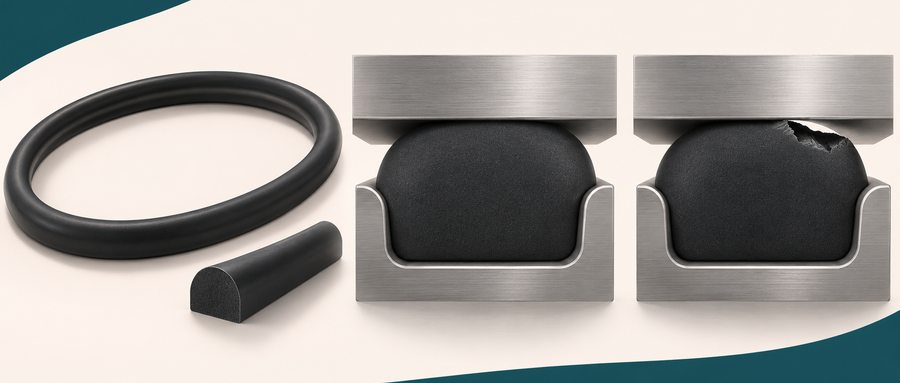
Identify the machine and its approved part or drawing first. Then check the exact rubber formulation (compound) and documents showing which uses it is suitable for. The same diameter, a familiar material name or a food-grade label does not prove that two seals are interchangeable. A longer pump-down time does not, by itself, prove that the door gasket has failed.
Check whether the gasket is the problem
The door gasket is the flexible seal between the chamber door and the surface it closes against. It helps keep the vacuum sealed, alongside the chamber, valves, connections and other seals. A refrigerator or laundry-machine door seal is not a suitable replacement just because it looks similar.
Cuts, a seal that has moved out of place, embedded residue or a changed contact pattern all need investigation. Slow pump-down can also have other causes. Labconco’s guidance separates system leaks from vacuum-pump problems [5]. The company’s freeze dryer maintenance guide also covers moisture, valves, piping and door condition. These are places to investigate, not a diagnosis of a particular machine.
| What happened? | What should be recorded? | What happens next? |
|---|---|---|
| The seal is cut, deformed or out of place | Identify the machine. Take clear overall and close-up photographs, noting the location and recent work. | Ask the responsible service team whether the seal needs replacing and whether the door or groove needs further inspection. |
| There is residue on the contact surface | Record the product, cleaning history and condition before cleaning under the approved procedure. | Follow the model’s cleaning and inspection instructions. Check whether any damage remains. |
| Vacuum performance changed, but no damage is visible | Keep alarm logs, comparable pump-down or hold-test records, chamber conditions and recent maintenance records. | Arrange a vacuum-system diagnosis. Symptoms alone are not enough to choose a replacement seal. |
| The problem returns after replacement | Keep the installed part number and revision, work order, and observations from before and after the work. | Have qualified personnel assess fit, seating, door alignment and other possible leak paths. |
On a phone, scroll tables sideways to see every column.
A published case shows why the door is not the only place to check. Investigators examining a pharmaceutical freeze dryer found nothing abnormal in the door seals. The leak came from a damaged valve diaphragm. Other cases involved aged seals at connections and loose clamps. The paper supports checking the wider vacuum system. Its machine-specific test limits, lubrication advice and repair methods are not instructions for a food plant. [1]
Give the records to qualified personnel. Isolation tests, door adjustment, disassembly and pressure work must follow the correct procedure for the machine. Do not improvise solvent tests. A pressure trace alone cannot establish that the door is the leak location.
Collect the details needed to identify the seal
Start with the machine details and original part number. A used seal may have stretched, swollen or remained deformed after compression (compression set). Its measurements can help identify it, but they are not a final manufacturing specification. If the part number is missing, ask the supplier which drawings, photographs or samples are needed.
Give each supplier the same version of the parts information
- Machine: record the manufacturer, model, serial number, door position and any modifications.
- Part: provide the original number and revision, plus an approved drawing if available. State whether it is a continuous moulded ring or a profile with a joint.
- Shape and size: provide the cross-section drawing, specified dimensions and tolerances, and details of the groove and mating surface. Include photographs showing orientation. Ask the supplier what must be measured.
- Rubber compound: provide the exact material or compound code and the specified hardness, if any. Colour or a material-family name alone is not enough.
- Operating and cleaning conditions: describe product contact, temperatures and cleaning agents. Include the actual chemical concentrations and contact times.
- Installation: obtain the approved instructions for removal, seating, inspection and lubrication. Confirm whether any lubricant is permitted.
Label missing information unconfirmed. Measurements from a worn seal do not become an approved drawing. Do not invent hardness, tolerance or compression targets.
Blue Alpine, for example, lists a silicone door seal with a specific outside diameter and product identity. This shows that a replacement listing can refer to a particular part. It does not prove that the seal fits another model or an industrial door. [2] The company’s freeze dryer accessories guide explains the wider approach to parts records. Its chamber guide covers the vessel and door assembly.
Check what each replacement offer covers
Send the same parts information to the original equipment supplier and any alternative supplier. An original equipment manufacturer (OEM) label does not remove the need to check the current part revision. A cheaper alternative needs written evidence that it suits the proposed use. Resolve these technical questions before treating the prices as comparable.
| What needs checking? | What should the supplier provide? | What does a general claim leave unanswered? |
|---|---|---|
| The right part and fit | The part number and revision, approved cross-section and dimensions, and the models it is stated to fit. | Does “same size” include the actual cross-section, joint and groove on the machine? |
| The actual rubber compound and batch | The exact compound designation, required batch identification and agreed conformity documents. | Does “silicone” or “EPDM” identify the actual formulation being supplied? |
| Operating and cleaning conditions | A written assessment against the operating and cleaning conditions supplied, including any limitations. | Does it cover the plant’s actual chemicals, concentrations, temperatures and contact times? |
| Suitability for the intended food contact | Documents identifying the supplied material, its specifications and permitted use under the actual contact conditions, as applicable. | What does “food grade” cover, and under which conditions? |
| Price, delivery and support | Quantity, quotation inclusions, delivery basis, lead time, installation support, warranty terms and arrangements for notifying changes. | Are tests, documents, freight or a later specification change included? |
Trelleborg’s food-and-beverage guidance includes food ingredients, cleaning media and hygiene requirements among the factors in choosing a seal. It does not rank silicone, EPDM or another elastomer as best for every freeze dryer. [3] The supplier still needs to assess the exact compound against the conditions it will face.
For US food-contact uses, FDA guidance distinguishes what a substance is, its specifications and the limits on its intended use. It also describes asking the manufacturer for a letter of guaranty covering that use. A broad “FDA approved” label cannot replace checking the documents and their conditions. This guide does not certify a gasket or establish compliance in every jurisdiction. [4]
Ask the equipment supplier how a substitute would affect its written support and warranty terms. Do not assume it is automatically approved, or that all warranty coverage is automatically lost. Keep unanswered questions about fit or documents on the quotation comparison as open items.
Decide what must pass before the machine is used again
Agree the checks and records before installation. A seal can look correctly seated and still need the checks required by the machine and plant procedures. Keep three decisions separate: whether reassembly and cleaning have passed their required checks; whether the empty system works as required; and whether any product-process release checks are needed.
- Record the work: identify the machine, removed and installed parts and revisions, batch where available, work order, installer and date. Keep the findings from the groove and mating surfaces.
- Record how it was tested: keep the approved procedure, chamber condition, relevant temperatures, instrument identity, valve configuration and acceptance criteria for that machine.
- Keep the results: retain comparable before-and-after data, observations, deviations, corrective work and required retests. Pump-down time and a pressure-rise test are different records. Neither replaces the other.
- Record the decision to resume use: the responsible plant/OEM team decides whether a representative product check is needed, and which evidence and approvals it requires. Record the decision and the responsible personnel.
Passing an empty-system vacuum check does not, by itself, prove drying performance with product loaded or provide food-safety clearance. Use the limits for that model and the plant’s applicable process and hygiene criteria. This guide sets out what to record. It does not set a universal pressure target, test duration, leak-rate limit or batch-release rule.
If the machine does not return to its agreed baseline, keep the failed result and continue the diagnosis. Repeatedly reseating an unidentified part does not resolve a poor fit, a problem with the contact surfaces or another system fault.
Plan care and spare parts
Follow the instructions for the exact machine and seal when cleaning, removing, refitting or storing it, or using a permitted lubricant. A grease recommendation for another machine or a published repair case does not give permission to use it on this gasket. Keep part identification and condition records as well as caring for the seal itself.
- Track its condition: record visible damage, residue, changes in seating and comparable vacuum trends alongside the cleaning and maintenance history.
- Investigate repeat problems: link repeated damage or failed baseline checks to the service record. The next review can then consider the part, groove, door and operating conditions together.
- Choose how many spares to hold: consider acceptable downtime, confirmed lead time, service history and the supplier’s storage or expiry restrictions. There is no universal spare quantity or replacement interval.
- Keep stored parts usable: label the exact part and revision, plus the batch where supplied. Retain its documents and approved storage instructions. Separate unidentified, damaged or expired stock where an expiry applies.
Use a planned shutdown to review missing part details and documents. Ordering again from an old photograph alone can leave the same questions unresolved.
Prepare the information needed for a parts enquiry
For equipment supplied by the company, send the model and serial number, original part number or drawing, photographs, operating and cleaning conditions, observed fault and required delivery date. Ask the team to confirm which replacement and support it can offer. Part identification and availability need review. This page does not promise stock or service for third-party brands.
Door gasket questions
Is the diameter enough to choose a gasket?
No. Match the approved part or drawing, cross-section, compound and operating conditions. A used ring’s diameter can help identify it, but does not prove that it fits.
Does slow pump-down mean the gasket needs replacing?
It means the cause needs checking. The vacuum pump, moisture, valves, connections and other seals may also be involved. Keep comparable records and arrange diagnosis for the specific model.
How often should a food plant replace the seal?
Follow the supplier’s instructions and the plant’s condition and performance records. This guide does not set a universal replacement interval or service life.
References and scope
- 冻干机真空系统常见故障的分析与解决方法 (2022). 机电信息, (9), 73–76. doi:10.19514/j.cnki.cn32-1628/tm.2022.09.020. Pharmaceutical equipment fault cases; no food-plant test limit or lubrication procedure transferred.
- Blue Alpine: silicone rubber door seal, Medium, 382 mm OD. A specific OEM listing, not cross-model compatibility evidence.
- Trelleborg: food and beverage sealing. Selection considerations, not approval of a proposed compound.
- FDA: determining the regulatory status of components of a food-contact material. US identity, specifications and intended-use conditions.
- Labconco: maintaining your freeze dryer and vacuum pump. General maintenance and fault categories; model instructions govern actual work.
About the Author: Zheng Wei
Founder & Freeze-Drying System Engineer
Fuzhou Xing Shun Da Refrigeration Facility Project Co., Ltd.
Zheng Wei participates in food freeze-drying trials, equipment selection, vacuum-system configuration, refrigeration planning, installation guidance, process optimization, and project handover. The project experience covers fruit, vegetables, cooked foods, seafood, meat, dairy products, herbs, and extracts.