
Food equipment procurement · Pre-bid guide
Freeze Dryer Auction: Checks Before Bidding for Food Production
Before you place a bid, determine what parts and records will arrive, what the seller actually tested, and what work remains to run your food. Use those answers to budget your complete restart cost rather than evaluating the hammer price alone.

Commit only after confirming the details you can verify before bidding closes. Identify the specific lot and any missing items. Evaluate what the operating evidence proves. Budget every expense required for a complete restart. Agree on who is responsible for equipment removal and destination testing.
This guide helps food businesses evaluate auction purchases. It explains how to assess an offered unit; it is not a live sales catalogue, nor is it an offer to inspect, broker or certify third-party machinery.
01 · Check the application and the sale
Is this the right lot for the food you plan to dry?
Specify your food, preparation steps, wet load, needed output and acceptable quality before browsing listings. Use that baseline to evaluate the machine. Equipment that dried a different product or ran in another facility has not yet demonstrated that it can process your food.
Next, trace the offer to the seller’s primary listing. Online searches frequently combine live auctions, fixed-price used listings, new equipment advertisements and directory aggregators. Follow the listing directly to the original auctioneer or seller website to inspect the exact catalogue entry. Verify the sale date, physical location, inspection access and written sale terms. Confirm whether the listing covers an entire system or merely an isolated chamber, vacuum pump or refrigeration skid.
Ask what the machine processed in its previous facility. Food processing, pharmaceutical manufacturing, laboratory testing and general non-food industrial service pose very different risks regarding product residues, cleaning access, tray loading, controls and component support. Evaluating those operating questions directly is far more reliable than relying on a familiar model name.
A dated example, not an active recommendation: Backes published a food-business liquidation scheduled for August 14, 2025. Its summary described 18 freeze dryers with vacuum pumps and a 15% buyer’s fee. That establishes what the historical announcement said; it does not establish today’s availability, the condition of an individual machine or a fee for another sale.[1]
Locate the sale through the public announcement, then inspect the individual lot records to determine whether the machine warrants a physical visit. If you fail to establish any one of the lot’s identity, written equipment inclusions, or inspection access before bidding closes, pause the bid decision. Comparable-model photographs cannot substitute for identity, inclusions or access.
02 · Identify what the buyer receives
What equipment, records and access are included?
Request a written list from the seller detailing every included component and every excluded item. Assemble the advertisement, photos, correspondence, inspection notes and test records into a single lot file. Match every record directly against the machine nameplate and serial number, and flag any marketing images that show a different unit or an earlier installation.
- Identify the machine: record the manufacturer, model, serial number, build year, modifications, previous products and service history.
- Count the supplied equipment: confirm the chamber, usable shelves, trays or carts, condenser, refrigeration skid, vacuum pumps, heat-transfer system, control cabinet and connecting parts.
- Check documents and control access: obtain manuals, drawings, wiring diagrams, component lists, calibration records, software licences and backups. Confirm the access needed to operate and maintain the controls.
- Check the destination: compare voltage, phase, frequency, cooling, heat supply and drainage requirements with the site. Check dimensions, transport mass and installation clearances.
- Check future support: ask whether seals, sensors, pumps, refrigeration components and controls support remain available for the exact revision.
Price every missing item before calculating your bid. If an auction excludes the external vacuum pump, fluid chiller or control cabinet, you may need to procure those subsystems separately and fund the required integration work. Identify who will verify each exclusion and obtain replacement cost figures before bidding. For broader guidance on selecting between factory-built systems and pre-owned inventory, review the food freeze dryer purchase guide.
A powered display can accompany an incomplete lot. In a closed Business Liquidators listing, the seller reported that a large Harvest Right freeze dryer powered on and its touchscreen lit up, but explicitly excluded the vacuum pump.[4] This describes the seller’s observations and exclusions for that lot only. It proves neither a complete drying system nor acceptable food output, and it is not a current availability recommendation.
Verify the written asset list against the physical hardware and nameplate serial number. Track uncertain inclusions in inspection and cost planning until confirmed; do not automatically assume unlisted items are missing or supplied.
03 · Ask what each test proves
What does the operating evidence actually show?
Ask the seller which machine functions were tested and request the supporting test records. Differentiate clearly between photographs, a power-on demonstration, empty system checks and food-loaded evidence. Each type of evidence answers a different practical question.
A published performance-confirmation study checked refrigeration, vacuum, pressure hold and shelf-temperature distribution separately. It studied pharmaceutical equipment. Those categories help frame questions about a used machine; its numerical acceptance limits and sterile-processing requirements are not universal food-equipment standards.[2]
| Evidence supplied | Useful information | What remains unresolved |
|---|---|---|
| Photographs and nameplate | Identity, visible configuration and accessible condition. | Hidden damage, leak tightness, control operation and food performance. |
| Power-on demonstration | Observed display, controls and functions actually exercised. | A complete cycle, calibrated readings and water-vapour handling. |
| Documented empty-system checks | Pump-down, pressure hold, condenser cooling, shelf response, instruments, alarms and interlocks under stated conditions. | Performance with the intended food, loading and vapour load. |
| Representative loaded run | Product preparation, wet loading, temperature and pressure trends, endpoint, acceptable yield and cycle duration. | Repeatability outside the tested recipe, geometry, load and operating range. |
On a narrow screen, scroll the table horizontally to read all evidence boundaries.
Request the test date, machine serial number, starting conditions, instrument identification and calibration status for every reported trial. Require raw readings, recorded deviations and the agreed acceptance basis instead of relying on an unsupported “passed” note.
Evaluate pump-down time and ultimate vacuum pressure separately. Pump-down time records the elapsed time to reach a target pressure, whereas ultimate pressure records the deepest vacuum reached under specific test conditions. When reviewing pressure-hold results, verify whether the chamber was fully isolated and dry during the test. Without isolated-chamber and dry-system conditions, pressure-hold results are harder to compare across machines.
Drying food requires heat transfer into the product and removal of water vapour. Equipment geometry, tray contact and radiation can change product temperature and batch behaviour. Shelf area or a minimum condenser temperature alone therefore does not demonstrate food throughput.[3]
When reviewing or defining a representative loaded run, specify the food formulation, preparation method, piece thickness or tray fill depth, total wet mass and freezing history. Check the drying endpoint and sampling positions against temperature curves, chamber pressure, acceptable yield and cycle duration. A completed trial demonstrates performance only within the tested recipe, geometry, load and operating range; operating-range limits apply even for the same food, and one observed successful result is not a broader guarantee. For a structured approach to evaluation, see the food freeze dryer acceptance guide.
If the seller cannot demonstrate a completed cycle, document exactly which verifications are missing. Ask qualified specialists to establish a documented basis for inspection, repair and retesting. If critical unknowns leave repair costs or technical risks unbounded, postpone or withdraw your bid rather than guessing an arbitrary discount.
04 · Work back to the bid
What can you afford after fees and restart costs?
Set your maximum budget for an operational machine. Work back using the payment method, tax basis, handling charges, actual premium and removal deadline to determine your top hammer price. Another sale’s fees, a retailer’s delivery offer and the manufacturer’s original warranty may not apply at auction.
Obtain prices and written work scopes for costs outside the bid:
- Inspection, missing components, repairs, calibration and functional retesting.
- Decommissioning, utility disconnection, rigging, loading, freight and insurance.
- Site preparation, utility connections, product trials, training and a reasoned contingency.
Classify every projected expense as a quoted price, an estimated cost or an unresolved risk. Record what work or equipment each amount covers, who supplied the basis and when confirmation is needed. If a material uncertainty cannot be bounded, keep your bid ceiling provisional.
Illustration only · Not an equipment valuation
Assume a buyer sets an US$30,000 total restart allowance and documents US$12,000 of costs outside the bid. If the assumed premium is 15% of the hammer price, with taxes and any other bid-linked charges excluded from this simplified example:
Maximum illustrative hammer price = (30,000 − 12,000) ÷ 1.15 ≈ US$15,652.
Those figures are invented planning assumptions, not current machine prices or a recommended bid. The calculation works only if the non-bid costs and uncertainty allowance are credible. The real payment schedule, tax basis and fee structure may require a different calculation.
Weigh the complete restart cost of a used machine against a supported new-system quotation configured for the same food duty. Compare acceptable output, utilities, realistic turnaround, ongoing maintenance and rejected-product risk across both options. Clarify this overall cost and risk balance before deciding whether the auction route is truly economical. For practical cost boundaries, consult the freeze-drying cost guide.
05 · Agree the handoffs before bidding
Who will remove it, and how will you accept it?
Define who will perform each task, what is delivered and the agreed completion deadline. Address utility disconnection, equipment preparation, rigging, vehicle loading, freight handoffs, unloading, destination reassembly and acceptance testing. Verify facility access dimensions, transport routes, lifting information and qualified trades beforehand. Scheduling an inspection viewing does not arrange equipment removal.
Check the actual sale’s release, damage, shortage and remedy conditions alongside the removal plan. Do not assume that proposing a destination test gives the buyer a contractual return or rejection right.
When the shipment arrives, check items against your lot inventory and document transport damage before assembly begins. Carry out installation in accordance with applicable manuals and specialist installation advice. Consult the commercial freeze dryer setup guide to verify site utilities and room layout requirements.
After reassembly, confirm the relevant vacuum, refrigeration, heating, measurement, control and protection functions under defined site conditions. Then test the representative food load against written acceptance criteria.[2][3] Keep unresolved deviations in the record; a power-on result is not a production-ready acceptance.
Audit cleaning and food safety independently from mechanical operation. Inspect for previous-product residues and integrate post-drying handling into the factory’s hazard controls; simply verifying that pumps and refrigeration run does not establish food safety.
Establish product checks as appropriate for your finished food: target residual moisture, product-centre dryness, mass stability, batch consistency, rehydration performance and sensory texture. Where required by your product specification or risk assessment, include water-activity measurements, microbiology testing and packaging studies. Agree on these acceptance expectations before treating the restart as complete.
A useful comparison basis
Compare the auction route with a defined food-production project
For a configured food freeze-dryer discussion, provide the product and formulation, prepared wet kilograms per batch and per day, initial moisture or solids, piece thickness or fill depth, quality and endpoint targets, destination utilities and intended schedule.
The engineering team can use those inputs to discuss equipment configuration and the product-testing information needed before selection. This is a preliminary food-equipment discussion; it is not an auction brokerage, third-party machine inspection, refurbishment commitment or warranty for a used lot.
Discuss the Food-Production Requirement
For the company’s published project scope, see manufacturing and engineering background.
Questions before committing to an auction lot
Is every used listing an auction?
No. Used equipment listings include fixed-price offers and separately sold components alongside auctions. Inspect the primary listing to determine the transaction format and exact equipment included.
Does “as-is” show that a machine is ready for food production?
No. Read the sale agreement to understand legal disclaimers, then independently evaluate operating history, missing parts, mechanical condition, cleanability and verified food performance. The sale label provides no evidence of operational readiness.
Can low empty-chamber pressure prove capacity?
No. An empty vessel test does not verify condenser ice-collection capacity under water-vapour sublimation, product heat transfer, batch cycle duration or finished-product uniformity. Evaluate those performance factors under representative loaded-test conditions.
What if the seller cannot demonstrate a cycle?
Treat operating condition as unverified and seek specialist advice to define the inspection, repair and retesting scope. If critical unknowns like missing subsystems or unsupported controls leave costs open-ended, do not assume a low purchase price justifies bidding.
How do you decide whether the used price is fair?
Evaluate the machine against its exact model, included hardware, demonstrated condition, serviceability, removal obligations and your food duty requirements. Then compare the total restart investment against a supported alternative. Listing prices alone cannot establish whether an unverified machine is worth buying.
Sources and engineering boundaries
- Backes Auctioneers. 18 Freeze Dried Machines, Fork Lift, Packaging & Office equip Auction—Freeze Dried USA. Historical event dated August 14, 2025; reviewed October 31, 2026. Seller and fee statements are specific to that announcement.
- 林洪, 邓凯, 宁钟灵, 杨子盛. 真空冷冻干燥机性能确认方法的研究[J]. 大众科技, 2023, 25(1): 74–77. DOI: 未检出. The pharmaceutical equipment case supports distinct functional-test categories; its numerical limits and sterile-processing requirements are not transferred to food equipment.
- Ratti C. Freeze drying for food powder production. In: Bhandari B, Bansal N, Zhang M, Schuck P, editors. Handbook of Food Powders: Processes and Properties. Woodhead Publishing; 2013:57–84. DOI: 10.1533/9780857098672.1.57. Used for qualitative food-process and scale-up boundaries, not an auction-unit performance guarantee.
- Business Liquidators. Harvest Right Freeze Dryer—Size Large. Closed lot; reviewed November 1, 2026. The seller’s power-on observation and vacuum-pump exclusion describe that lot only; no current availability, drying performance or event year is inferred.
Current lot details and terms must be obtained from the actual seller. No specific available machine, realised savings or accepted auction purchase is represented here.
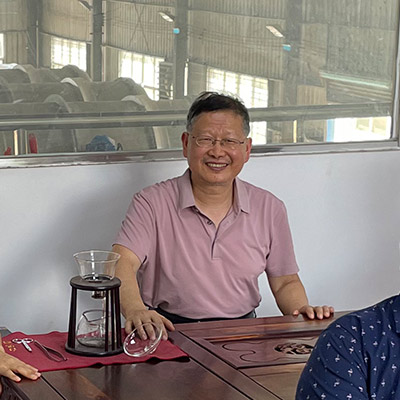
About the Author: Zheng Wei
Founder & Freeze-Drying System Engineer
Fuzhou Xing Shun Da Refrigeration Facility Project Co., Ltd.
Zheng Wei participates in food freeze-drying trials, equipment selection, vacuum-system configuration, refrigeration planning, installation guidance, process optimization, and project handover. The project experience covers fruit, vegetables, cooked foods, seafood, meat, dairy products, herbs, and extracts.