
Buying Your First Freeze Dryer for Fruit and Vegetable Snacks: How Much Capacity Does a Weekly Order Need?
Fruit and vegetable snacks ship by the pouch. Freeze dryer quotes usually list kilograms of wet feed per batch. How do you connect those figures when choosing a machine? Run a batch with your own ingredients and finished-product specification, from loading the trays through sealing and inspection. Count the pouches you can ship, then see how many such batches fit in your plant’s working week.
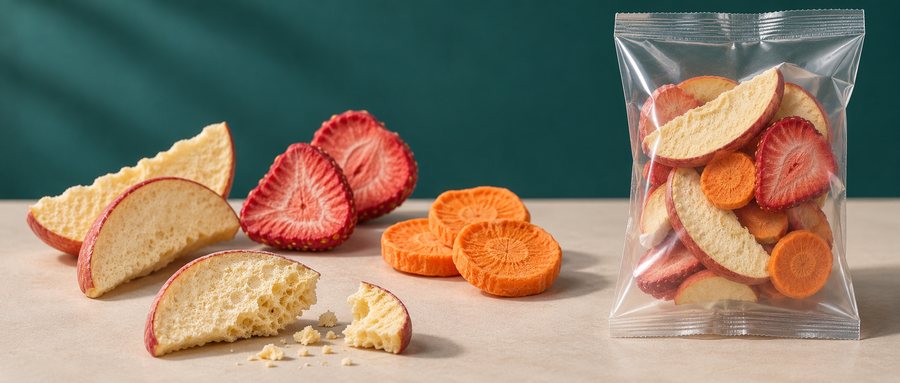
How many accepted pouches can a batch of wet feed produce?
Set the finished-product specification before the trial. For apple crisps, agree on the net weight, the permitted amount of broken pieces and the texture you want when the pouch is opened. The same tray can yield a different usable weight after sorting for a whole-slice snack than for a product sold as smaller pieces. That changes the number of pouches the batch can fill.
Unload, transfer, sort, weigh and seal as you plan to do in production. Record the dry weight at unloading, the packable weight after sorting and the number of pouches that pass inspection. Breakage and packing losses then show up in the pouch count you will use to estimate capacity.
Taste the apple slices again in the sealed pouch. A study of mandarin puree varied exposure time under fixed temperature and humidity and measured texture using puncture force and fracture sounds. Puree and whole apple slices have different structures. To set a packing time limit for your plant, seal your own slices after the waiting times you actually observe. Once you know which pouches count towards delivery, go back to the trays and measure the area they took. Mandarin puree texture study
Trace those pouches back to the trays
When a quotation lists kilograms of fresh feed per batch, put the scale at the trays. Weigh the apples after coring, slicing and draining surface water, in the condition in which they enter the dryer. Record slice thickness, feed solids, occupied tray area and load per tray together. The same wet weight from the next lot can bring a different amount of apple solids into the chamber.
If the trial slices fit in a single layer but the proposed production load requires overlap, check how the overlapping pieces dry. Shelf heat reaches the frozen slices, ice turns to vapour, and the vapour travels through the dried material before freezing onto the condenser. Slice thickness, freezing history and loading pattern affect this process. Sample the centre and edges of trays and different shelf levels. Place a probe inside a slice to measure product temperature, and measure directly on the shelves to check their temperature uniformity. Review of freeze-drying heat and mass transfer
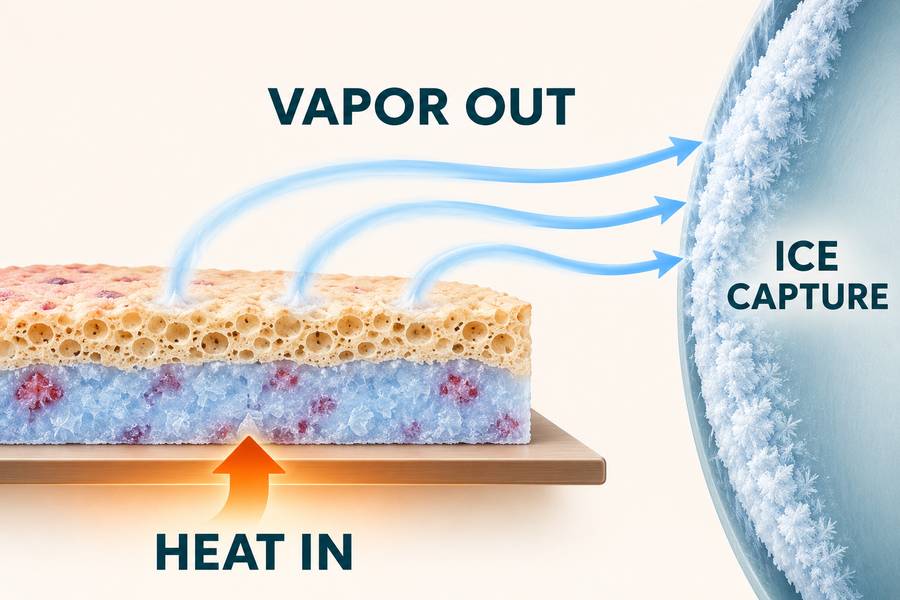
Check the samples against the agreed moisture content, texture and piece specifications. Measure water activity separately if specified. Moisture content is the amount of water in the product; water activity reflects its availability. Ready-to-eat snacks need hygienic handling from preparation to packing. Freeze drying by itself is not a validated pathogen kill step. Once the loading pattern produces acceptable slices, record how long it takes from loading to the point at which the chamber can take another batch. That time determines how many batches fit in a week. Water activity guidance · Freeze drying and food hygiene
Does a 12-hour drying time allow two batches a day?
A Malaysian fruit and vegetable project reported a load of about 35.7 kg on 3 square metres of trays, with 12 hours of drying and 1.77% final moisture. Drying alone would fill an entire day for two batches. Any additional chamber time for loading, unloading or defrosting pushes two complete cycles beyond a day. The report gives the drying time. For scheduling, measure when the chamber is ready to take the next load. Malaysian project run report
Ask the operator to log two times: when the batch starts occupying the chamber and when the chamber is ready to load again. Include freezing where it takes place inside the chamber, pump-down, drying, unloading and defrosting wherever they block the next load. Count overlaps once. If slices are frozen elsewhere, schedule that freezer and the transfer crew separately. A vacant slot is usable only when feed, people and chamber are ready together.
Work back from weekly deliveries to batch count and machine capacity
Start with the number of released pouches needed each week. Divide it by the accepted pouches per batch from your loaded trial and round up to get the batch count. Work back from dispatch, allowing time for sealing and inspection, to find the latest time the last batch can leave the chamber. Put loading, running and turnaround on the shift plan to see how many complete batches actually fit.
If fewer batches fit than the order requires, divide the weekly pouch target by the number of usable batch slots. This gives the required average yield per batch. Round up when setting a uniform whole-pouch target. Use trial yield per square metre to estimate tray area and ask the supplier to verify it at the proposed loading pattern on the machine you plan to buy. Time the heavier load as well. Its extra yield only contributes to the weekly order if the larger batch fits the schedule.
If enough acceptable dry product leaves the chamber on time but queues at packing, divide the remaining pouch count by the number the packing line can complete and release per hour. That gives the additional productive hours needed. Schedule those hours after the dry product is available, with sorting, weighing, sealing and inspection staffed before dispatch. The operation that holds up packing determines whether to extend the shift or move people to that step.
Before ordering, put the trial feed and slice specifications, tray layout, accepted pouches per batch and full chamber occupancy in the equipment proposal. Include the shift plan that meets the weekly target. Repeat the yield and time measurements at the agreed load during acceptance so procurement and production can use the same evidence to decide whether the dryer meets the requirement.
Discuss your freeze-drying project
Bring your product specification, target weekly output and trial data to an equipment sizing discussion.
References
- Mandarin puree texture study (2022)
- Nowak, Jakubczyk (2020). The Freeze-Drying of Foods—The Characteristic of the Process Course and the Effect of Its Parameters on the Physical Properties of Food Materials
- U.S. FDA, Water Activity (aw) in Foods
- University of Minnesota Extension, Freeze drying
- Malaysia fruit and vegetable snack freeze-drying project
About the Author: Zheng Wei
Founder & Freeze-Drying System Engineer
Fuzhou Xing Shun Da Refrigeration Facility Project Co., Ltd.
Zheng Wei participates in food freeze-drying trials, equipment selection, vacuum-system configuration, refrigeration planning, installation guidance, process optimization, and project handover. The project experience covers fruit, vegetables, cooked foods, seafood, meat, dairy products, herbs, and extracts.